
Reviewed · MUMBAI MARKET TOURS
Magical Markets Tour in Mumbai with a local
Mumbai’s markets are a city lesson in miniature: flowers and fruit beside religious offerings, textiles, jewellery and everyday household goods. This guided walk moves through several distinct market areas, with a stop at Mumba Devi Temple, whose goddess gave Mumbai its name.
I like that you can see how different trades shape the city, from silk and clothing in Mangaldas Market to gold and stones in Zaveri Bazaar. I also like that the guide offers shopping tips and local context, so the walk is more than a hunt for souvenirs.
One thing to consider: two hours is a short time for a route that covers many markets. You’ll get a taste of the area rather than a slow, detailed visit to every stall, and the lanes can be crowded and demanding in warm or rainy weather.
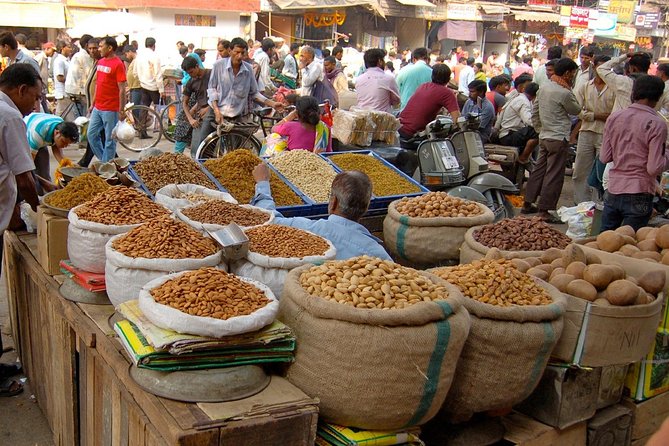
- Bhuleshwar Market brings together produce, pooja goods, home items, fabric accessories and imitation jewellery in narrow lanes.
- Mumba Devi Temple connects Mumbai’s name to the goddess Mumbadevi.
- Zaveri Bazaar is the city’s largest jewellery market, with gold, stones and ornamental work.
- Mangaldas Market, operating since 1893, is known for silk, textiles, tailors and designer boutiques.
- Crawford Market, opened in 1871, is known for produce, imported cheese and handcrafted chocolate.
- The group is capped at 15, and the tour begins and ends at Shree Swaminarayan Mandir.
A quick route through Mumbai’s market districts
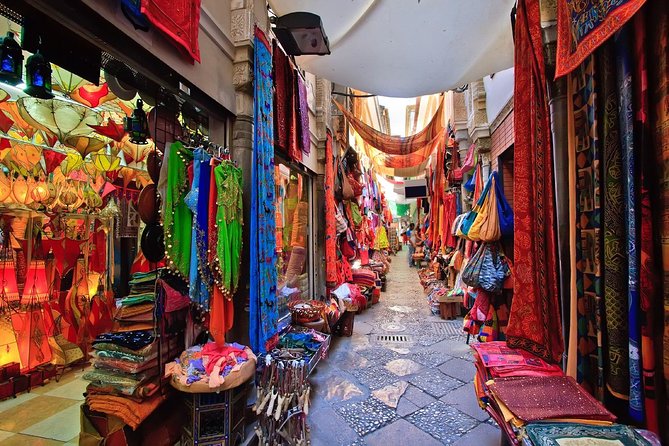
This is a walking tour for seeing how commerce, worship and daily life sit close together in central Mumbai. The route names Bhuleshwar, Zaveri Bazaar, Kalbadevi, Chor Bazaar, Mangaldas Market and Crawford Market, as well as Mumba Devi Temple. Each stop has its own character, so the value is in the contrast: flowers and offerings in one lane, fabrics and jewellery in another.
The tour lasts about two hours, which makes it a manageable introduction if you’re new to the city or short on time. It also means you should expect a brisk overview, not an unhurried browse through every market. If you find a stall you love, you may need to return later on your own.
The group can have up to 15 people. That is small enough for a guide to share stories and practical shopping advice, though a full group may need to pause or bunch up in narrow passages. The morning and evening choices let you fit the walk around the rest of your day. Dress for the weather, and bring your own umbrella in the rainy season or summer sun. A scarf or jacket is not supplied if you feel cold between October and March.
Starting at Shree Swaminarayan Mandir
The meeting point is Shree Swaminarayan Mandir (Vadtal Gadi), on Kika Street in Bhuleshwar. The tour ends back at the same place, which keeps the walk simple to plan: you won’t need to arrange a separate pickup or work out a new end point.
The starting temple is not the same place as Mumba Devi Temple, which is a stop along the route. That distinction matters when you’re finding your way there. The listed address is in the Bhuleshwar area, and the meeting point’s plus code is XR3J+J33.
From the start, you move into streets where shopping is not staged for visitors. The stalls sell ordinary necessities as well as goods for worship, home life and special occasions. A guide can help you understand what you’re seeing and how the markets fit together, which is useful in an area where a first-time visitor could easily focus on the crowd and miss the detail.
More market tours around Mumbai:
- Mumbai: Street Food and Night Markets Tour
★ 4.9 · 719 reviews - Mumbai Morning Market Tour of Flowers, Fish, and More
★ 5.0 · 100 reviews - Mumbai Morning Market Tour of Flowers, Fish, and More
★ 5.0 · 82 reviews
Bhuleshwar’s small lanes and many trades
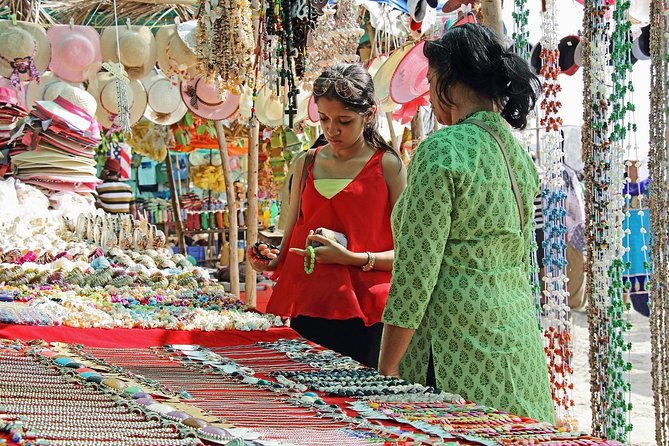
Bhuleshwar Market is described as a tangle of narrow, modest lanes with a wide mix of goods. You may pass fruit and vegetables, imitation jewellery, household items, fabric accessories, rose petals and pooja supplies. The variety is the point: this is not one neat shopping arcade with a single specialty, but a district where several kinds of trade share tight quarters.
Religious goods are especially telling. Rose petals and pooja items sit among everyday merchandise, giving you a glimpse of how shopping and worship overlap in the city. The guide’s stories can add context, while shopping tips may help you decide when to browse, ask questions or move on.
The lanes are small, so don’t expect a polished retail setting or plenty of room to stop. Keep your belongings close and be ready to walk at the group’s pace. If you want time to compare products or make a purchase, ask the guide how much flexibility there is before you commit to a long browsing stop.
Mumba Devi Temple and the city’s name
A visit to Mumba Devi Temple adds a pause to the market walk and a link to the city’s identity. Mumbai takes its name from the Goddess Mumbadevi, so this is more than a quick change of scenery from the shops. It gives you a chance to connect the commercial streets around you with the beliefs and traditions that are part of local life.
The tour information does not specify how long the temple visit lasts, or provide details about entry requirements. Treat it as a stop within a compact walking route, rather than planning on an extended temple visit. If you have questions about local customs, this is a good moment to ask your guide.
The itinerary begins at Shree Swaminarayan Mandir, while Mumba Devi Temple is included as a separate visit. If temples are a particular interest, you may want to ask what the stop involves when you meet the guide. That helps set expectations without assuming the tour includes a long explanation or a particular ceremony.
Zaveri Bazaar’s gold and glittering stones
Zaveri Bazaar is Mumbai’s largest jewellery market, with shops devoted to ornamentation, gold and stones. After the mixed stalls of Bhuleshwar, this district has a sharper focus. You’ll see a market built around jewellery and the skilled work and buying decisions that come with it.
Even if you are not shopping for gold, the area offers a clear look at a major part of Mumbai’s trade. A guide can help you make sense of the district and offer practical advice if you are considering a purchase. Do not treat a brief guided walk as a substitute for careful research, comparison or checking the details of a high-value item.
The tour does not promise time for shopping at each stop, nor does it state that purchases are included. Think of this as a chance to see the market and learn how to approach it, not a hosted buying appointment.
More tours and days out around Mumbai:
- Dharavi slum tour in Mumbai by Female tour guides of the slum
★ 5.0 · 1,976 reviews - Mumbai: Full-Day Sightseeing Tour of Mumbai
★ 4.9 · 1,822 reviews - Private Mumbai Sightseeing Tour (Traveller’s Choice Award Winner)
★ 5.0 · 1,565 reviews - Elephanta Caves & Island Guided Private Tour
★ 5.0 · 1,327 reviews
Kalbadevi, Chor Bazaar and the flower alley

The route continues through Kalbadevi’s streets and alleys, with a visit to Chor Bazaar, known for antiques and furniture. The name may suggest one kind of attraction, but the useful detail here is its association with older goods and furnishings. If you enjoy browsing objects with a past, this part of the walk may catch your eye.
The tour also includes Mumbai’s flower alley. Set against the jewellery and textile districts, it offers another view of the city’s market life, with flowers forming part of the goods sold and the rituals they serve. The market stops are most interesting as a sequence: they show how closely different needs and trades sit together.
The tour does not give a detailed list of what will be available for sale on the day. Markets change, and the specific stalls you encounter may vary. Go with curiosity rather than a fixed shopping list, and ask the guide what is worth noticing as you walk.
Mangaldas Market’s silk and textiles
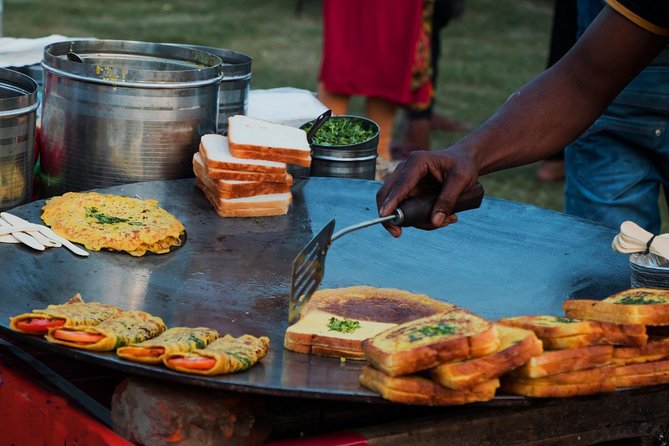
Mangaldas Market began in 1893 and is known for silk and textiles. Its many tailors and designer boutiques make it a useful stop if you’re interested in fabric or clothing made to order. Even without buying, you can see a different side of the market districts: one shaped by materials, design and the work of turning cloth into garments.
This is also where the guide’s shopping advice may be especially helpful. If you’re considering fabric or a tailored piece, ask about how to assess the options and what questions to put to a seller. The tour promises a chance to learn about local art and craft, but it does not specify that a workshop or hands-on demonstration is included.
Keep your time in perspective. A two-hour walk covering several districts cannot provide a full tour of the textile trade or a long consultation with a tailor. If you find something you’d like to explore further, note the location and come back after the tour.
Crawford Market’s produce and treats
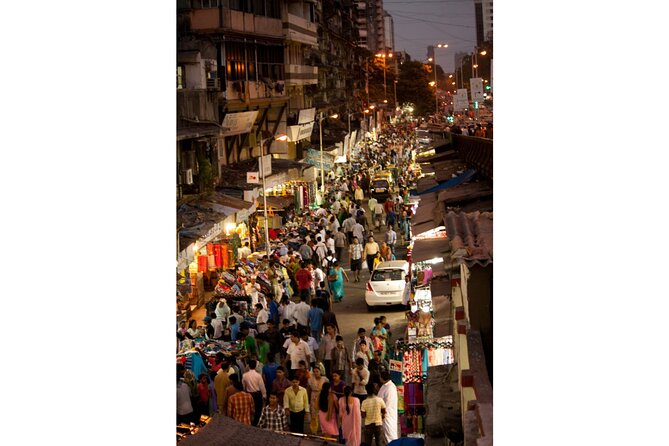
Crawford Market opened in 1871 and is known for fruit and vegetables, along with imported cheese and handcrafted chocolate. It broadens the route beyond worship goods, jewellery and textiles, showing a market associated with food and household shopping.
The mix is a useful reminder that a market visit is not only about the things you might take home. It is also a chance to see what people buy for daily use and how specialty products sit alongside basic produce. The tour does not specify whether tastings are included, so don’t count on sampling the cheese or chocolate as part of the price.
Because the itinerary covers several stops, you may not have much time to linger. If food is a priority, ask your guide whether there is a chance to browse or buy something during the visit. The answer may depend on the pace and conditions that day.
What $12.44 gets you
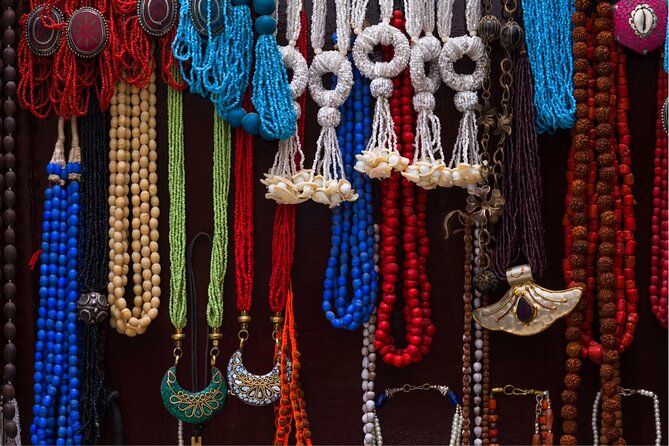
At $12.44 per person, the tour is an affordable way to get an introduction to several central Mumbai market districts with a local guide. The price includes a storyteller and guide trained by Yo Tours, plus conversation about local art and craft and shopping tips. You are paying for guidance and context, not a private shopping service or a long stop at every market.
Group discounts are available, and the group is limited to 15 people. That cap helps keep the walk from becoming unwieldy, though it is still a group outing rather than a private tour. Mobile tickets are accepted, and confirmation is received at booking.
The price does not include an umbrella or a scarf or jacket. Bring what the weather calls for, since the route is outdoors and the tour does not supply those items. Free cancellation is available up to 24 hours before the start time; cancellations made within 24 hours are not refunded, and changes inside that period are not accepted.
Who will enjoy this walk most
I’d choose this tour if you want a guided introduction to Mumbai’s markets without dedicating half a day to shopping. It suits curious first-time visitors, people interested in textiles or jewellery, and anyone who wants to understand more than the storefronts. The guide’s role is central: the stories and practical advice help turn a crowded walk into a more legible one.
You may find it less suitable if you want a quiet stroll, a slow temple visit or time to bargain at length. The route passes through busy market streets, and the short duration means you’ll need to keep moving. If shopping is your main goal, use the tour to learn the districts, then return to the markets that interest you most.
The overall rating is 4.1 out of 5 from 9 ratings, a modest sample rather than a guarantee of how any one outing will go. A particularly strong account describes the walk as a true taste of Mumbai and singles out guide Nasir as a major help. Guide assignments are not specified, so you should not assume Nasir will lead your tour; the broader takeaway is to make use of your guide’s local knowledge and ask questions as you go.
Should you book the Mumbai markets tour?
Book it if you want a low-cost, guided look at several very different market areas, with a temple visit and practical shopping pointers. The mix of flowers, pooja goods, gold, textiles, antiques, produce and specialty foods gives the walk a wider scope than a single-market outing.
Skip it if you need lots of time to shop, prefer a slower pace or want a detailed visit to each site. At about two hours, this is a sampler. Go prepared for close lanes and changing weather, keep your expectations flexible, and treat the guide’s advice as the start of your own exploration.
FAQ
How long is the Magical Markets Tour in Mumbai?
The tour lasts approximately two hours.
Where does the tour start and end?
It starts at Shree Swaminarayan Mandir (Vadtal Gadi), on Kika Street in Bhuleshwar, and ends back at the same meeting point.
Which markets are included?
The route includes Bhuleshwar Market, Zaveri Bazaar, Kalbadevi, Chor Bazaar, the flower alley, Mangaldas Market and Crawford Market.
Does the tour visit Mumba Devi Temple?
Yes. Mumba Devi Temple is included in the route. The meeting point is a different temple, Shree Swaminarayan Mandir.
Can I choose a morning or evening tour?
Yes. Morning and evening tour times are offered.
What is included in the price?
The tour includes a friendly storyteller and guide trained by Yo Tours, along with a chance to learn about local art and craft and have conversations about it.
Are an umbrella or warm clothes provided?
No. An umbrella is not included for rain or summer sun, and a scarf or jacket is not included if you feel cold between October and March.
Just added around Mumbai
- Victorian Gothic Heritage Quarter and Art Deco Walking Tour★ 4.9 · 14 reviews
- Mumbai Airport to Mumbai Hotels : Private Transfers★ 5.0 · 13 reviews
- Private Walking Tour in Dharavi Slums★ 5.0 · 7 reviews
- Mumbai Sightseeing Tour★ 5.0 · 11 reviews
- Mumbai by Night Guided Tour★ 5.0 · 6 reviews
- Vegetarian Indian Cuisine Virtual Cooking Class Experience from Mumbai★ 5.0 · 4 reviews
- Private Mumbai 2-Day Tour Package:City + Slum & Elephanta Island.★ 5.0 · 3 reviews
- Taj Mahal Day Trip Including Same Day Flights from Mumbai★ 5.0 · 3 reviews
Mumbai Market Tours, compared.

Mumbai Morning Market Tour of Flowers, Fish, and More
Read our review →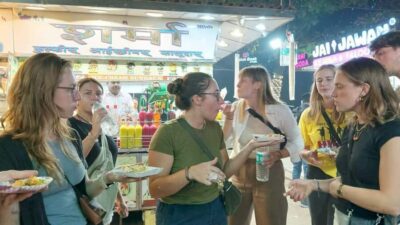
Mumbai Street Food Tour with Evening Bazaar Walk
Read our review →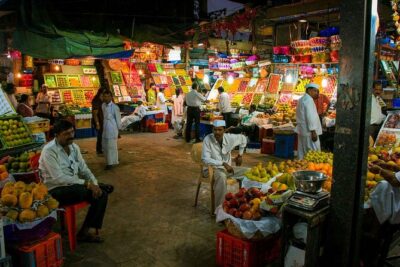

Mumbai Street Food & Bazaar Tour with Local Transport
Read our review →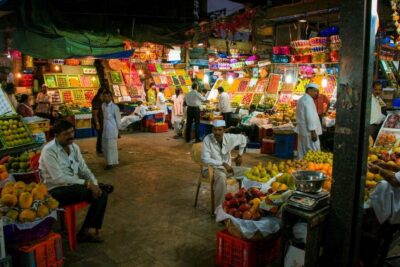
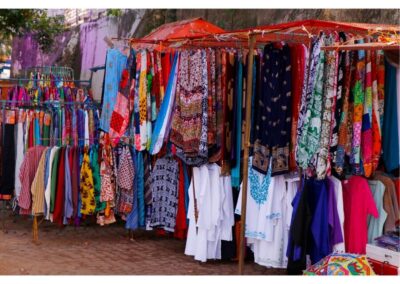
Vibrant Markets of Mumbai (2 Hours Guided Walking Tour)
Read our review →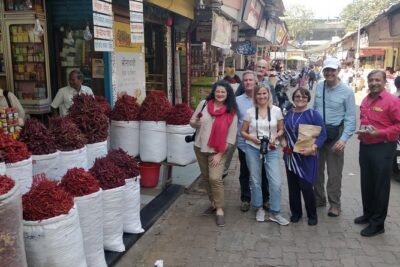
Mumbai Spice Markets and Bazaars Tour with Guide and Transport
Read our review →Browse the lists this tour appears in