
Reviewed · MUMBAI HERITAGE TOURS
Best South Mumbai Heritage Walk
South Mumbai’s story is written on its streets: a grand railway station, a sculpted fountain, a Neoclassical town hall and a monumental arch all sit within a walk that links the Fort district with Colaba. This is a useful way to see how colonial rule shaped the city’s public buildings, without watching it pass from a car window.
I like two things in particular: you get close to the architecture, and a guide can connect the landmarks to Mumbai’s past instead of leaving you to decode a row of impressive facades on your own. I also like that the group is capped at 15, small enough for questions and photos.
One consideration: this is a three-hour walk, so you need to be comfortable spending much of the tour on your feet. The stops are described as street-level visits, and no interior access is promised.
- A three-hour route through South Mumbai: See eight named landmarks between the CST area and Colaba.
- Architecture with a story: Look for Victorian Gothic Revival and Neoclassical styles, alongside the city’s early 20th-century Gateway of India.
- A guide makes the difference: Aakash, Gautam, Sandesh and Sanika are among the guides named for this walk. Their history, local insight and friendly conversation are frequently praised.
- A compact group: The maximum is 15 people, which should make it easier to hear the guide and ask questions.
- Two start-time options: Choose a morning or afternoon departure to suit your plans.
- A low-cost introduction: At $17.89 per person, the price is modest for a guided tour of several central landmarks.
Why South Mumbai Makes Sense on Foot
Mumbai is a city of immense scale, and South Mumbai’s historic core rewards a slower look. On foot, you can pause at a fountain, notice the differences between architectural styles and take photographs without trying to peer through a vehicle window. The walk also gives you a sense of how close the landmarks are to one another.
The route’s theme is colonial influence on the city’s built environment. The buildings are not all alike: Victorian Gothic Revival appears alongside Neoclassical design, while the Gateway of India belongs to a later period. A guide can help you read those contrasts and place them within Mumbai’s development.
This is not a museum visit with a long stretch indoors. Expect an outdoor city walk, with brief stops at some sites and longer ones at others. If you want detailed interior visits or a slow, unhurried exploration of every building, this tour may feel too brisk. If you want a guided overview that helps you decide where to return, it is a practical start.
From CST to Colaba: The Walk’s Shape
The meeting point is beside McDonald’s near Chhatrapati Shivaji Terminus, on Dr Dadabhai Naoroji Road. The stated end point is Regal Cinema in Apollo Bandar, close to the Gateway of India. That start and finish suggest a walk south through the Fort area toward Colaba.
The named stops include both ends of that route, though the stop order provided does not match the meeting and finish points. Treat the list as a set of places covered, rather than a guaranteed minute-by-minute sequence. If the order matters to you, confirm it with Mumbai Dream Tours before setting out.
There are eight named stops and about three hours in total. Some have 30 minutes allotted, while three have only 10 minutes. Those shorter pauses are likely best understood as quick looks and explanations, not time to explore each site at length.
More heritage tours around Mumbai:
- Group Guided Walking Tour in Fort and Colaba
★ 5.0 · 1,073 reviews - Private Guided Walking Tour in Fort & Colaba
★ 5.0 · 895 reviews - Private Guided Open Jeep Tour in Fort & Colaba
★ 5.0 · 170 reviews
CST: A Grand Start Near the Railway Lines
Chhatrapati Shivaji Terminus, often called CST, is a historic railway station and a UNESCO World Heritage Site. It is also the first landmark to know if you are meeting in this part of town. The station is associated with Victorian Gothic Revival architecture, one of the styles the walk sets out to show you.
The tour allows about 30 minutes here, enough for a close look and photographs, though not necessarily a full exploration of the station. The meeting point is nearby, so arrive with a little time to find the correct spot rather than trying to orient yourself at the last minute.
A guided explanation is especially useful at a large building like CST. You can look beyond its size and ask how its architecture fits the wider story of colonial Mumbai. The walk does not promise an interior visit, so plan on seeing the station from the outside unless the guide confirms otherwise.
Kala Ghoda: Art, Streets and a February Festival
Kala Ghoda is known for its annual arts festival, held each February. The 30-minute stop offers a chance to take in the area and hear how art and heritage sit alongside the district’s historic buildings.
If you are visiting in February, the festival may add another layer to the neighbourhood, but the tour description does not promise festival access or activities. Outside that period, the stop still works as a way to explore one of South Mumbai’s named cultural districts with a guide.
This is a good place to ask questions about local life and the area’s identity, not just its architecture. The guide’s personality matters here: the strongest comments about this walk praise guides who make conversation broad and engaging, rather than reciting dates and moving on.
Town Hall: Neoclassical Lines in the Fort District
The Asiatic Society of Mumbai’s Town Hall is a Neoclassical building in the Fort locality. Its style offers a clear contrast with the Victorian Gothic architecture associated with CST. Seeing both on one walk helps make the city’s architectural variety easier to grasp.
The stop is allotted 30 minutes. That gives the guide time to explain the building’s place in the historic district and leaves room to look at its exterior details. No admission fee is listed, but an interior visit is not specified.
For me, this is one of the stops where a guide adds more than a map can. A building’s name and style are useful, but context helps you understand why it belongs in the story of South Mumbai.
More walking tours around Mumbai:
- Private Guided Walking Tour in Bandra Queen of Suburbs
★ 5.0 · 383 reviews - Private Guided Spiritual Walk in Banganga Hindu Temples
★ 5.0 · 271 reviews - Mumbai: Dharavi Slum Walking Tour by First Female Tour Guide
★ 4.9 · 192 reviews - Private Guided Non-Veg Street Food Walking Tour in Muslim Quarter
★ 5.0 · 140 reviews
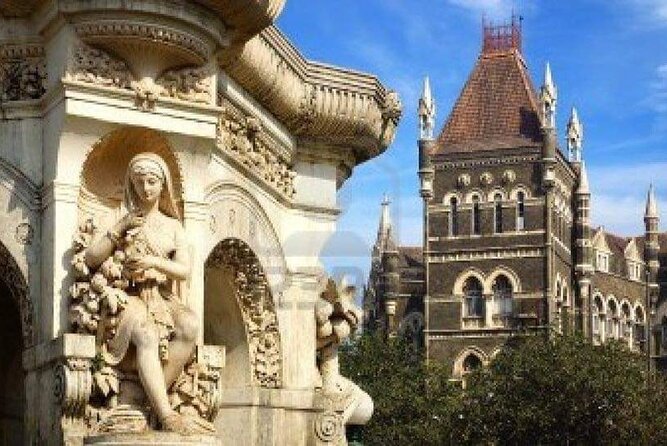
Flora Fountain: A Sculpted Pause at Hutatma Chowk
Flora Fountain stands at Hutatma Chowk, at the southern end of the historic Dadabhai Naoroji Road. It is an ornamentally sculpted heritage monument, and its detailed form makes it a natural place to stop and take photographs.
The tour allows about 30 minutes here. That is generous compared with the shorter pauses at the High Court or Taj Mahal Palace, and gives you time to study the fountain rather than simply pass it. Keep in mind that the walk remains on city streets, so the pace and space around the stop can depend on conditions at the time.
The fountain also helps anchor the walk in its urban setting. Rather than seeing heritage as a collection of isolated buildings, you can connect it to the roads and public spaces around it.
Horniman Circle: A Green Break in the Fort District
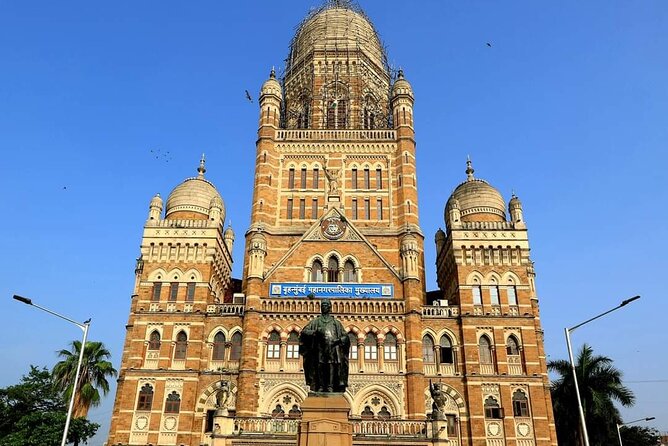
Horniman Circle Gardens cover about 2.5 acres in the Fort district and are surrounded by office complexes. The tour allots just 10 minutes here, so think of it as a brief pause rather than a leisurely park visit.
That short stop still has value. After several architectural landmarks, a garden gives you a different view of the district and a moment to catch your breath. If you hoped for a longer rest, bring that expectation down to size; the schedule is built around seeing several sites in three hours.
The High Court and the Taj Mahal Palace
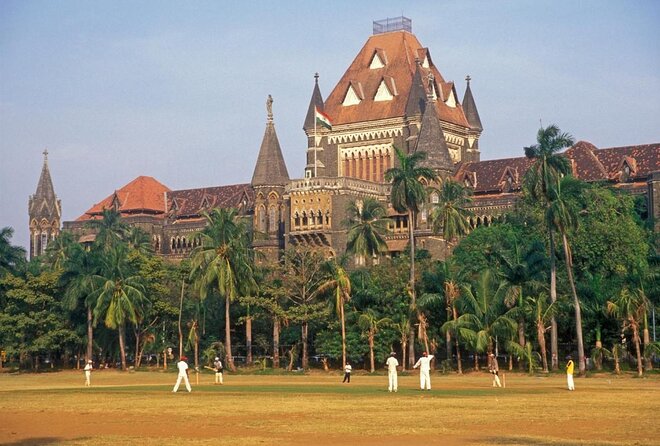
The Bombay High Court serves the states of Maharashtra and Goa. The 10-minute stop is a short chance to see the building and hear how it fits into the city’s civic history. The tour does not state that you enter the court, so expect an exterior viewing.
The Taj Mahal Palace is a heritage five-star hotel in Colaba. Another 10-minute stop lets you take in the landmark from nearby, with the guide providing context. This is not a hotel tour, and there is no promise of access inside.
Together, these two stops show different sides of the city: public institutions and a famous hotel. Their short time allocations mean the value lies in the guide’s explanation and the overall route, rather than an extended visit at either place.
Gateway of India: A Landmark Near the Finish
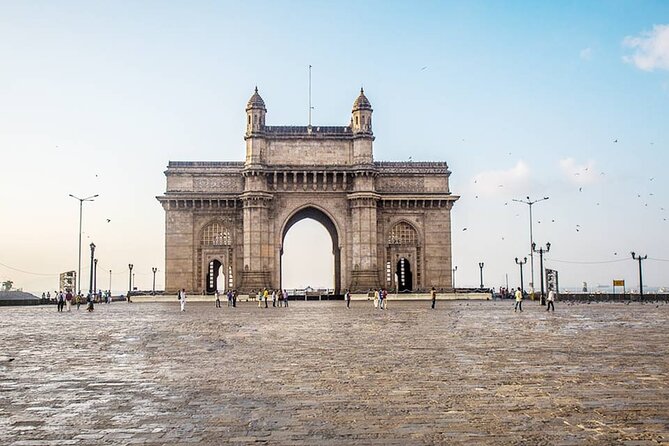
The Gateway of India is an arch-monument built in the early 20th century. It is one of Mumbai’s best-known landmarks and a fitting point to connect the walk’s architectural stops with the city’s waterfront setting.
The stop is allotted 30 minutes, giving you more time for photographs and a closer look than at several other sites. The stated endpoint, Regal Cinema in Apollo Bandar, is nearby. The tour does not include an admission charge for the Gateway, and no paid entry is part of the described experience.
The Gateway is often the image people bring to Mumbai, but seeing it after a walk through the Fort district gives it more context. You will have seen the different styles and civic buildings that help explain the city’s colonial-era development, rather than treating the arch as a stand-alone photo stop.
Guides, Group Size and the $17.89 Price
The walk costs $17.89 per person and lasts about three hours. For that price, you are paying for a guided introduction to eight landmarks, not transport or entry to paid attractions. Since the listed stops are free to visit, the main value is the guide’s local knowledge and the structure they bring to the walk.
Guide assignments can vary. Aakash, Gautam, Sandesh and Sanika are among the guides associated with the tour. Their personal style appears to be a real strength: Aakash is praised for historical detail and an easy manner, while Gautam is noted for photo spots and even Bollywood insights. Sandesh is described as informative, and Sanika as friendly, with knowledge that extends beyond the route itself.
The group maximum is 15. That is a sensible size for a city walk: it limits the chance of being lost in a large crowd while still allowing the tour to run at a workable pace. Morning and afternoon options make it easier to fit around a day in Mumbai, and the mobile ticket is convenient to carry on your phone.
The overall rating is 4.8 out of 5, with 96 percent recommending the experience. Still, one booking concern deserves a mention: a cancellation without advance notice has been reported, followed by difficulty getting a refund. That appears to be an exception, but it is a reminder to keep the operator’s contact details handy and check for updates before you leave.
Free cancellation is available up to 24 hours before the start time. Within 24 hours, the payment is not refundable, and changes are not accepted. The cut-off follows local time.
Who Should Book This Walk?
I would choose this tour if you want a guided orientation to South Mumbai’s landmark architecture and prefer to explore at street level. It suits first-time visitors, architecture fans, and anyone who wants a local guide to connect the buildings instead of simply collecting photographs.
It may be less suitable if you have limited mobility, dislike walking, or want long visits inside buildings. The tour lasts about three hours, includes several short stops, and does not promise indoor access. If you can manage that pace, the modest price buys a useful overview and a chance to ask questions along the way.
Book it for the guide-led context and close-up views, not for a deep visit to each site. Check the morning or afternoon timing that works for you, arrive at the meeting point near CST with time to spare, and confirm the route order if you have a particular landmark you do not want to miss.
FAQ
How long does the South Mumbai Heritage Walk last?
The walk lasts approximately three hours.
How much does the tour cost?
The listed price is $17.89 per person.
Where does the tour start and end?
It starts beside McDonald’s near CST Station, on Dr Dadabhai Naoroji Road, and ends at Regal Cinema in Apollo Bandar, near the Gateway of India.
Are morning and afternoon departures available?
Yes. Morning and afternoon tour options are available.
How many people can join the tour?
The maximum group size is 15 people.
What is the cancellation policy?
You can cancel up to 24 hours before the start time for a full refund. Cancellations or changes made within 24 hours are not accepted, and the amount paid is not refunded.
Just added around Mumbai
- Victorian Gothic Heritage Quarter and Art Deco Walking Tour★ 4.9 · 14 reviews
- Mumbai Airport to Mumbai Hotels : Private Transfers★ 5.0 · 13 reviews
- Private Walking Tour in Dharavi Slums★ 5.0 · 7 reviews
- Mumbai Sightseeing Tour★ 5.0 · 11 reviews
- Mumbai by Night Guided Tour★ 5.0 · 6 reviews
- Vegetarian Indian Cuisine Virtual Cooking Class Experience from Mumbai★ 5.0 · 4 reviews
- Private Mumbai 2-Day Tour Package:City + Slum & Elephanta Island.★ 5.0 · 3 reviews
- Taj Mahal Day Trip Including Same Day Flights from Mumbai★ 5.0 · 3 reviews
Mumbai Heritage Tours, compared.


Heritage Walk: Recommended by Gigi Hadid as a must-do in Mumbai
Read our review →
Mumbai 800 Year Worli Village: Talking Goddess, Old Fort & more
Read our review →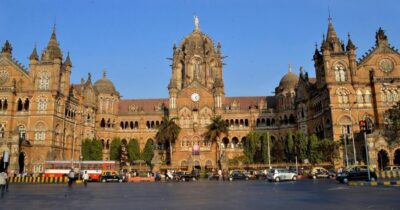

Hill-station & Heritage: Lonavala & Karla Caves Tour from Mumbai
Read our review →
Mumbai Heritage Walk and Elephanta Caves Experience
Read our review →Browse the lists this tour appears in