
Reviewed · MUMBAI BICYCLE TOURS
Best Bicycle Tour In Mumbai
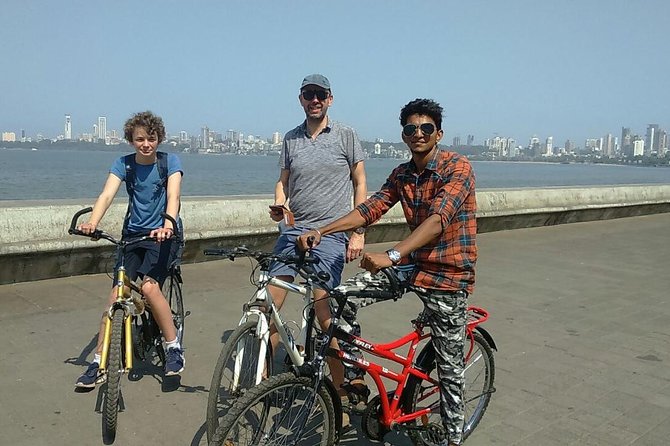
Mumbai’s landmarks make more sense when you see them in motion. This three-hour morning bicycle tour links colonial-era buildings, crowded markets, a working cow shelter, and the Arabian Sea, giving you a quick but varied introduction to South Mumbai.
I like two things in particular: the route balances famous sights such as the Gateway of India with everyday places such as Crawford Market, and a small group of no more than 12 makes it easier to keep pace with a guide. One consideration: Mumbai traffic and street crossings can feel demanding on a bike, and a past night ride raised concerns about helmets and road safety. Ask the operator about helmets and the current route before you book.
Key points to know before you ride
- The early start is part of the experience: You’ll cycle through South Mumbai as the day gets going, with the Arabian Sea and the Gateway of India on the route.
- The sights vary sharply: Grand public buildings give way to food and clothing markets, a temple, a cow shelter, and a historic dock.
- It’s a guided ride, not a private one: Groups are capped at 12, and guides on past rides have included Roy and Kurtin.
- Plan for city cycling: A previous night-tour participant described difficult crossings and said no helmets were provided on that ride. Check current safety arrangements, especially if you’re a less confident rider.
- The advertised price is $39 per person: The tour lasts about three hours, with a stated minimum age of six.
- The start and finish are in Colaba: You meet at Kailash Parbat Hindu Hotel N Restaurants and return there at the end.
South Mumbai before the day gets loud
The route starts early in Colaba, in the southern part of Mumbai. That timing matters: you get to see the city begin its day rather than only encounter its busiest hours. The ride is designed to cover several districts and types of places in a short stretch, so expect a brisk introduction rather than long visits inside each attraction.
At the Gateway of India, the first stop, you’ll have time to look out over the Arabian Sea and take in the landmark’s scale. The route description calls attention to sunrise, but the exact view will depend on the date and conditions. Even without a dramatic sky, the waterfront gives you a useful first sense of Mumbai’s connection to the sea.
The next stop is the Taj Mahal Palace hotel, viewed from outside. Its architecture makes a striking contrast with the streets around it, and your guide is expected to explain the building’s history, including the 2008 terrorist attacks. This is a short pause, not a hotel visit, so think of it as a chance to look and listen before moving on.
More bicycle tours around Mumbai:
- Mumbai Bicycle Tour
★ 5.0 · 137 reviews - Mumbai: Morning Bicycle Tour
★ 5.0 · 40 reviews - Mumbai: Early Morning Bicycle Tour
★ 4.8 · 30 reviews
Gothic architecture, clock towers, and civic power
From the hotel, the route heads toward the Chhatrapati Shivaji Maharaj Vastu Sangrahalaya, once called the Prince of Wales Museum. The stop is brief, but the building’s Indo-Saracenic design is worth noticing. The tour focuses on what you can see from outside and on the museum’s place in the city, rather than a visit to its galleries.
The Rajabai Clock Tower offers another architectural pause. It sits near Mumbai University, and the guide can explain its history and details. Look up: the tower is one of those buildings that can disappear into the city’s visual clutter if you only hurry past it.
The Bombay High Court and Mumbai University add to this stretch of monumental civic and academic buildings. Together, they give you a glimpse of the institutions that shaped the city during the colonial period. The itinerary does not specify a timed stop at the High Court, so you may see it as part of the ride rather than have time to explore its grounds.
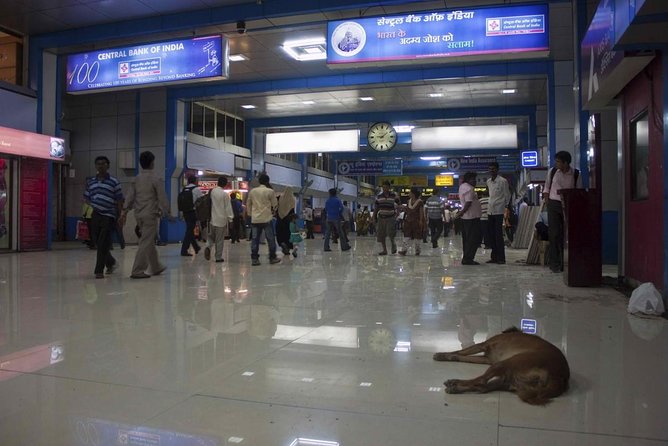
Then comes Chhatrapati Shivaji Terminus, formerly Victoria Terminus. Its Victorian Gothic Revival style incorporates Indian design elements, and the building remains an active railway station as well as a UNESCO World Heritage site. The tour allows about 15 minutes in the area, enough to take in the exterior and hear some context, but not enough to explore the station at length.
Across from the terminus is the Brihanmumbai Municipal Corporation building, a heritage structure with its own grand presence. This pairing is useful: in one short stretch, you see two landmark buildings that reflect the city’s public life, one devoted to transport and the other to local government. It’s a lot to absorb from a bicycle saddle, so don’t expect a detailed architectural lecture at every stop.
Crawford Market and the lanes of old trade
The ride shifts tone at Mahatma Jyotiba Phule Market, better known as Crawford Market. Its building dates to 1869, and the market remains a major part of South Mumbai’s commercial life. The stop gives you a chance to see the market area and hear how its role and name have changed over time.
Nearby, the route passes through a network of older trading areas. Mangaldas Market is associated with silk and cloth, while Bhuleshwar is known for fruit and vegetables. The wider area also includes Jewelry Bazar. These are working markets, not staged attractions, and that is the point: you get a glimpse of how commerce shapes the neighborhood.
The practical trade-off is pace. The tour is only about three hours, and the market stops are short. You’ll have time to take in the surroundings, but not to shop at leisure or wander every lane. If markets are a priority, consider returning later on your own, when you can slow down and browse.
Mumba Devi Temple and a cow shelter
Mumba Devi Temple is dedicated to the goddess associated with Mumbai, and the city’s name is linked to her. The stop helps connect the city’s everyday identity with its religious life. As with any place of worship, follow your guide’s instructions and be respectful of people who are there to pray.
The tour also visits Bombay Panjrapole, a cow shelter. Its Gujarati name is associated with the care of animals, and the stop offers a window into the role of cow protection in Indian culture. This is one of the route’s more unusual visits, and a welcome change from the usual procession of monuments and photo stops.
An adjacent Jain temple is also listed as a place the ride may pass or visit. Jain temples are places of worship for followers of Jainism, with architectural traditions of their own. The available details do not spell out how much time is spent there, so treat it as a possible part of the neighborhood experience rather than a guaranteed long visit.
More tours and days out around Mumbai:
- Dharavi slum tour in Mumbai by Female tour guides of the slum
★ 5.0 · 1,976 reviews - Mumbai: Full-Day Sightseeing Tour of Mumbai
★ 4.9 · 1,822 reviews - Private Mumbai Sightseeing Tour (Traveller’s Choice Award Winner)
★ 5.0 · 1,565 reviews - Elephanta Caves & Island Guided Private Tour
★ 5.0 · 1,327 reviews
Marine Drive, the sea, and Sassoon Dock
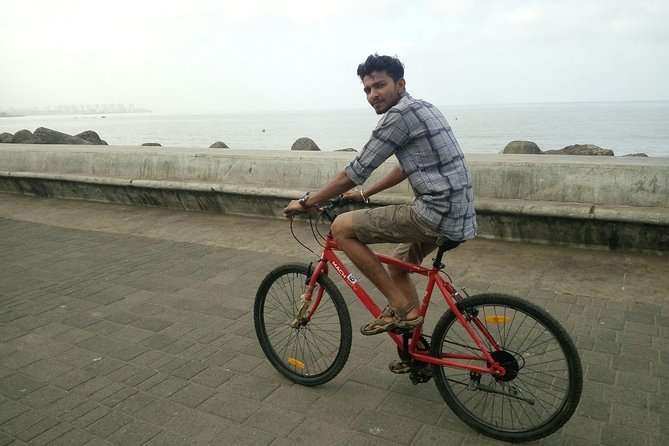
At Marine Drive, the route reaches the Arabian Sea again. The curved, three-kilometer promenade is one of Mumbai’s best-known waterfront stretches. From the road and promenade, you can appreciate the open water and the long sweep of the bay, a change of scene after the close quarters of the markets.
The itinerary allows about 15 minutes here. That’s enough for a pause and a look, but not a long walk along the full promenade. The value is in seeing how the city meets the sea, and in getting a short breather before the final stop.
Sassoon Dock, built in 1875, is one of Mumbai’s oldest docks and the first wet dock constructed in Bombay. It adds a working-port note to the route’s grand buildings and commercial streets. The description does not promise a specific activity inside the dock, so expect a stop focused on the place and its history, not a staged demonstration.
The ride returns to the meeting point in Colaba. Taken together, the route’s stops cover architecture, worship, trade, animal care, transport, and the waterfront. You won’t have time to go deep at every site, but the variety makes the ride a useful way to orient yourself before exploring more slowly.
What the cycling is really like
The tour is advertised as a morning bicycle ride, and the early start is a clear advantage for anyone who wants to see South Mumbai before the day’s full rush. Still, this is a city ride, not a protected-path excursion. The route includes streets and crossings, and one participant on a night version of the tour described some crossings as unnerving and said helmets were not supplied.
That account concerns a night ride, not necessarily the current morning tour, so it does not prove that the same conditions or equipment apply now. But it is a sensible reason to ask the operator directly whether helmets are provided, what route is currently used, and whether the guide can accommodate different cycling abilities. The operator responded to the concern by saying it would work on safety measures, including helmets and safer routes; check what has changed before you set off.
The stated minimum age is six, and the activity says most people can participate. That does not mean every rider will be equally comfortable in traffic. If you or a family member is new to cycling, ask about the riding conditions before committing. The group limit of 12 should help the guide manage the ride, but it cannot remove the need to stay alert.
Guides, group size, and the human side
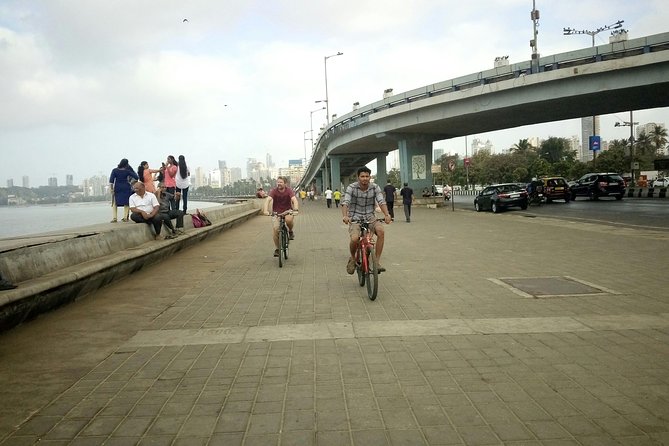
The guide is central to the experience. The route moves quickly, and a good explanation can make the difference between seeing a row of old buildings and understanding how Mumbai’s institutions, markets, and religious sites fit together. Past guides named on this tour include Roy and Kurtin, though you should not assume either will lead your ride.
The small-group cap is a practical plus. With no more than 12 people, it should be easier to hear the guide, regroup at stops, and keep the ride from feeling like a large procession. It is still a group activity, so the pace and pauses are shared rather than tailored entirely to you.
This tour seems best suited to curious visitors who enjoy seeing a city from street level and are comfortable on a bicycle. It can also work well for families whose children meet the minimum age and can manage the ride. If you want extended museum visits, long market browsing, or a relaxed walking pace, this probably isn’t the right format.
Is $39 good value?
At $39 per person, the tour offers three hours of guided cycling through a concentrated set of South Mumbai sights. You’re paying for the route, the guide’s explanations, and the chance to connect places that might otherwise take more effort to navigate on your own. A group discount is listed, though the amount and terms are not specified.
The value is strongest if this is your first visit and you want a broad orientation. You cover landmarks, working markets, a religious site, a cow shelter, the sea, and a historic dock in one outing. The trade-off is that individual stops are short, and the tour is not a substitute for a dedicated visit to the museum, the markets, or the waterfront.
The activity is commonly booked about 53 days ahead, which suggests it can be worth planning early if your dates are fixed. That is an average, not a booking requirement. Pickup is offered, but the stated meeting point is in Colaba, so confirm the pickup details rather than assuming transport is included.
Should you book this Mumbai bike tour?
Book it if you want an active, compact introduction to South Mumbai and are happy to cycle in city conditions. The mix of famous architecture and everyday neighborhoods gives the ride more texture than a checklist of photo stops, and the guide can help you make sense of what you’re seeing.
Skip it, or ask detailed questions first, if traffic makes you uneasy, you need a helmet and have not confirmed one is available, or you prefer to explore each stop at your own pace. For confident riders with a short stay in Mumbai, this can be a smart use of a morning. For everyone else, the key decision is not whether the sights are worthwhile, but whether cycling through the city feels like the right way to see them.
FAQ
How long does the bicycle tour last?
The tour lasts about three hours.
How much does the tour cost?
The listed price is $39 per person. Group discounts are offered, but the discount amount is not specified.
Where does the tour start?
The meeting point is Kailash Parbat Hindu Hotel N Restaurants, Sheila Mahal Society, Shop No. 5, 1st Pasta Lane, Colaba, Mumbai.
Where does the tour end?
The activity ends back at the meeting point in Colaba.
How many people can join the tour?
The maximum group size is 12 people.
What is the minimum age?
The minimum age is six years.
Is pickup offered?
Yes, pickup is listed as an option. Confirm the pickup arrangements with the operator before booking.
How far in advance is the tour usually booked?
It is booked an average of 53 days in advance. That is an average, not a stated booking deadline.
What is the cancellation policy?
You can cancel at least 24 hours before the start time for a full refund. Cancellations made less than 24 hours before the start time are not refunded, and changes within 24 hours are not accepted.
Just added around Mumbai
- Victorian Gothic Heritage Quarter and Art Deco Walking Tour★ 4.9 · 14 reviews
- Mumbai Airport to Mumbai Hotels : Private Transfers★ 5.0 · 13 reviews
- Private Walking Tour in Dharavi Slums★ 5.0 · 7 reviews
- Mumbai Sightseeing Tour★ 5.0 · 11 reviews
- Mumbai by Night Guided Tour★ 5.0 · 6 reviews
- Vegetarian Indian Cuisine Virtual Cooking Class Experience from Mumbai★ 5.0 · 4 reviews
- Private Mumbai 2-Day Tour Package:City + Slum & Elephanta Island.★ 5.0 · 3 reviews
- Taj Mahal Day Trip Including Same Day Flights from Mumbai★ 5.0 · 3 reviews
Mumbai Bicycle Tours, compared.
3 Hours Early Morning in South Mumbai Heritage Bicycle Tour
Read our review →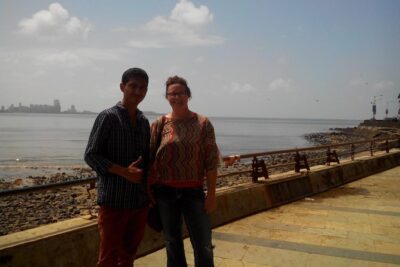
Mumbai City Sightseeing Guided Tour on a Bicycle
Read our review →Browse the lists this tour appears in