

Reviewed · MUMBAI HERITAGE TOURS
Mumbai heritage walk- Story of Gothic and Art Deco buildings
Mumbai’s grand buildings tell a story of ambition in stone. On this three-hour walk, you follow that story from the Victorian Gothic arches of Chhatrapati Shivaji Terminus to the curved, tiered façade of Eros Cinema, with a guide explaining how architecture reflects the city’s rise as a trading center.
I especially like two things: the route puts Gothic and Art Deco side by side, so you can see how Mumbai’s architectural tastes changed, and the small group limit of 15 leaves room for questions. Pankaj, a guide associated with the walk, is praised for making the city’s history clear and entertaining.
The main consideration is that this is an outdoor architecture walk, not a series of interior visits. You see most buildings from the street, and the David Sassoon Library visit is limited to its lobby because access beyond it is for members.
What to know before you go
- Eight landmarks in three hours: The route covers CST, Eros Cinema, Empress Court, the Bombay High Court, Rajabai Clock Tower, David Sassoon Library, Elphinstone College and the Prince of Wales Museum.
- A clear architectural contrast: Gothic Revival details and Art Deco curves give you two distinct ways to read Mumbai’s built history.
- A small group cap: No more than 15 people can join, which suits a walk where you may want to stop and ask about details.
- Snacks are provided: A useful touch on a three-hour outing, though this is not presented as a meal.
- Mostly exterior viewing: The experience focuses on façades and stories, rather than entry to every landmark.
- A central start and finish: Meet at Chhatrapati Shivaji Terminus and finish at the Prince of Wales Museum, now called Chhatrapati Shivaji Maharaj Vastu Sangrahalaya.
Read Mumbai through its buildings
Mumbai’s Gothic and Art Deco buildings are more than handsome backdrops. They offer a compact way to understand how the city grew into a major trading center, and how wealth, civic pride and changing tastes shaped its public face. This tour uses architecture as its organizing thread, so the stops add up to more than a checklist of notable façades.
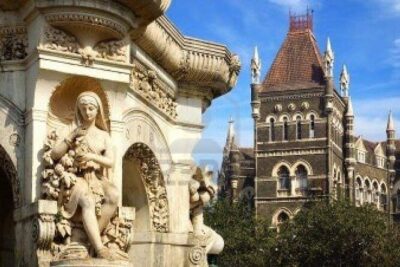
The Gothic buildings reflect a period when British-era civic and educational institutions took on elaborate forms, often with pointed arches and decorative stonework. The Art Deco stops bring a different mood: clean lines, rounded forms and bold profiles that signaled modernity and status. Seeing both styles during one walk helps you spot the shift instead of treating each building as an isolated photo opportunity.
The group is capped at 15, a practical advantage in a city walk built around looking closely and listening. A large group can make it hard to hear a guide or examine a detail without falling behind. Here, the smaller size should make it easier to follow the explanations and ask questions as the route progresses.
Pankaj is the guide named in connection with the walk. His approach is described as friendly and enthusiastic, with stories that cover Mumbai’s past as well as the architecture itself. That blend matters: a building’s name and style are useful, but a good explanation of the people and events around it is what makes the details stick.
More heritage tours around Mumbai:
- Group Guided Walking Tour in Fort and Colaba
★ 5.0 · 1,073 reviews - Private Guided Walking Tour in Fort & Colaba
★ 5.0 · 895 reviews - Private Guided Open Jeep Tour in Fort & Colaba
★ 5.0 · 170 reviews
Start with the Gothic drama of CST
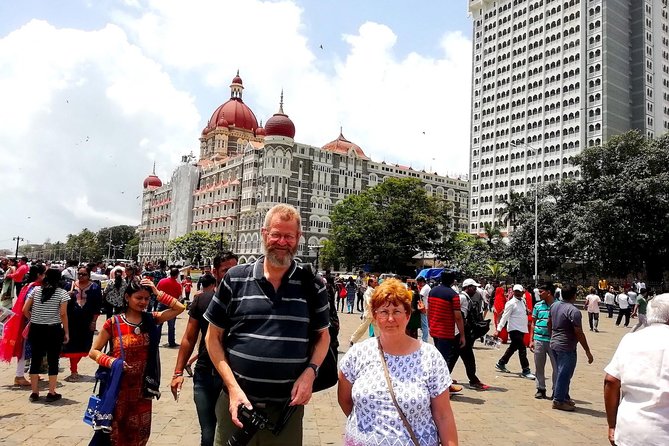
The walk begins at Chhatrapati Shivaji Terminus, often still called CST. It is a UNESCO heritage building and one of India’s best-known examples of Victorian Gothic Revival architecture. The stop is allotted 30 minutes, giving the guide time to draw attention to the building’s mix of Gothic forms and Indian decorative themes.
That blend is the point to watch for. The station does not simply copy a European style; its design combines Victorian Gothic features with elements drawn from Indian traditions. The result says something about the ambition and cultural mix of a city shaped by trade and colonial rule.
CST is also a working transport hub, so you are looking at a building with a public purpose, not a quiet monument set apart from daily life. The tour begins here for a good reason: it gives you an imposing example of the Gothic style before you encounter other civic and educational buildings along the route.
Admission is included at this first stop, though the walk’s central focus is the architecture and its story. If you are hoping for a long interior visit, keep expectations modest. The stated stop is 30 minutes, and the route has seven more landmarks to cover.
Spot the Art Deco curves at Eros and Empress Court
At Eros Cinema, the focus turns to Art Deco. The cinema is viewed from outside, where its tiered form rises like a wedding cake, capped by a semicircular tower. That shape gives the guide a useful visual contrast to CST’s pointed Gothic lines.
The allotted 30 minutes is substantial for an exterior stop, and it allows time to look beyond the building’s silhouette. Art Deco is often easiest to recognize through its geometry and streamlined forms; here, the cinema’s stacked tiers make the style legible even if you have never studied architecture.
Next comes Empress Court, another Art Deco building, this time residential. The group spends 15 minutes viewing it from outside and discussing how living in such a building could signal wealth and social standing. That shift from a cinema to a home helps widen the story: Art Deco was not only a style for public entertainment, but also part of how people presented their status.
You will not go inside either building, so the reward is in learning to read the façades. Look at the overall outline first, then note the forms and details the guide points out. If you prefer tours centered on interiors, this pair may feel brief; if you enjoy understanding a city by looking carefully at its streets, they make a strong case for the walking format.
Find Justice and Mercy at the Bombay High Court
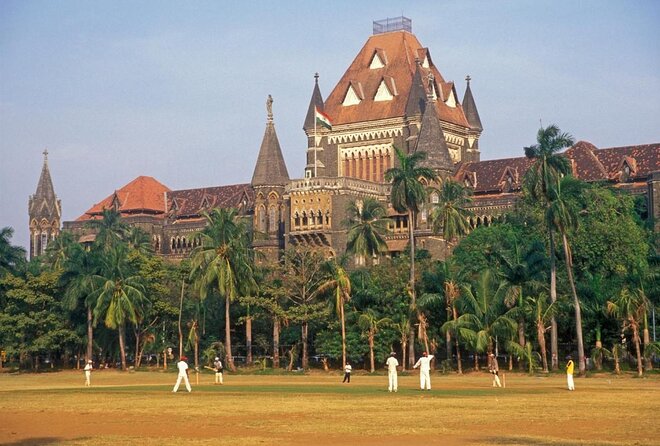
The Bombay High Court is another Gothic landmark, viewed from outside during a 30-minute stop. The guide points out statues of Justice and Mercy on top of the building, details that connect the architecture with the institution’s purpose. It is a practical example of how ornament can carry meaning, not just decorate a roofline.
This stop also helps you see how widely Gothic architecture was used across the city. After the station, the High Court shows the style in a different civic setting. The walk’s value lies in those comparisons: you can start recognizing repeated forms while noticing how each building uses them for its own purpose.
Because you are looking from outside, the visit is about the building’s exterior and the stories attached to it, not courtrooms or legal proceedings. Bring your attention upward; the statues are placed high on the structure, and looking for them gives the stop a clear focus.
More walking tours around Mumbai:
- Private Guided Walking Tour in Bandra Queen of Suburbs
★ 5.0 · 383 reviews - Private Guided Spiritual Walk in Banganga Hindu Temples
★ 5.0 · 271 reviews - Mumbai: Dharavi Slum Walking Tour by First Female Tour Guide
★ 4.9 · 192 reviews - Private Guided Non-Veg Street Food Walking Tour in Muslim Quarter
★ 5.0 · 140 reviews
Hear the story behind Rajabai Clock Tower
Rajabai Clock Tower is introduced as Mumbai’s Big Ben. The 30-minute stop gives the guide room to tell the story of how the tower was financed by a patron who wanted his visually challenged mother to hear the chimes and keep her fasts punctually. It is a specific, human detail that brings the landmark out of the category of grand architecture and into family life.
The tower is also a reminder that civic monuments often have personal histories behind their construction. Here, the chimes were not merely a public time signal; they had a purpose for one particular person. That kind of story is well suited to a guided walk, where the guide can connect what you see overhead to the people who helped make it possible.
The stop is exterior viewing, not a tower climb. If you are hoping to go up for a view, this experience does not list that as part of the visit. Instead, use the time to take in the tower’s profile and listen for the tale behind its funding.
See the Gothic side of David Sassoon Library and Elphinstone College
At David Sassoon Library and Reading Room, the walk turns to the story of Jewish banker David Sassoon, who built the Gothic structure as a library and reading room. The group spends 20 minutes here, but access inside is limited: only members may enter, and the visit is from the lobby.
That restriction is worth knowing before you book. You can still appreciate the building’s exterior and get a look at the lobby, but this is not a full library visit. The guide’s explanation of Sassoon’s role and the building’s original purpose gives the stop context that a quick look from the street would miss.
Elphinstone College follows, with a 15-minute stop to appreciate another Gothic structure. Its alumni include Bal Gangadhar Tilak, Dr. B. R. Ambedkar and Jamshedji Tata, names that connect the building to important strands of Indian public and intellectual life. The building itself is the focus of the stop, rather than a campus tour or a visit inside.
Taken together, the library and college show how Gothic architecture appeared in institutions devoted to reading and education as well as government. They also bring the story closer to Mumbai’s people. The buildings are not just examples of a style; they are places linked to learning, public life and notable figures.
Finish at the Prince of Wales Museum

The final stop is Chhatrapati Shivaji Maharaj Vastu Sangrahalaya, commonly known as the Prince of Wales Museum. The tour allows 10 minutes to view its heritage building, which was previously used as a military hospital for the Children’s Welfare Exhibition. That unusual past gives the site an added layer beyond its present identity as a museum.
The museum marks the end of the route, not a full museum visit. The tour ends at 159–161 Mahatma Gandhi Road, so you can consider returning later if you want more time with the collections. No museum admission is included in the stop details, and the short time allotment is a clear sign that the focus here is the building and its place in the architectural story.
Starting at CST and finishing at the museum also gives the walk a straightforward shape through central Mumbai. The route links transport, civic, residential, educational and cultural landmarks without requiring you to plan separate visits to each one.
Is $35 a fair price for the walk?
At $35 per person, you are paying for a three-hour guided route, the context that links eight landmarks, a small-group format and snacks. The price makes most sense if you want an informed introduction to Mumbai’s architecture and history, rather than simply directions between buildings. A guide can help you notice the Indian elements in Gothic Revival design, identify Art Deco features and connect individual sites to the city’s growth.
The value depends partly on your expectations. Most stops are viewed from outside, and the library visit is limited to its lobby. If you want museum entry or access to interiors, this walk does not promise that. If you are happy to spend time looking at façades and hearing the stories behind them, the route offers a focused way to see several landmarks in one morning or afternoon.
The small group cap is another part of the value. With a maximum of 15 people, the experience is designed to feel more personal than a large coach tour. The guide’s ability to answer questions is especially useful here, and Pankaj’s friendly, story-led approach is a good fit for anyone who likes history explained in plain terms.
Snacks are provided, but the walk is not described as a food tour. Think of them as a modest extra during a three-hour outing, not a substitute for a meal. Wear comfortable walking shoes and be ready to spend the tour outdoors, looking up and moving between sites.
Who will enjoy this walk most?
This is a strong choice if you are interested in architecture, urban history or the stories behind Mumbai’s landmarks. It works especially well early in a stay, when you want a framework for understanding the city’s Gothic buildings and Art Deco neighborhoods. The guide’s explanations can also make later visits more rewarding, since you will have a better sense of what to look for.
History fans who prefer personal stories to long lists of dates should find the route appealing. The Rajabai Clock Tower’s connection to its patron’s mother, for example, gives you a memorable detail to attach to the building. The route also suits visitors who want a guided overview but do not need to enter every site.
It may be less suitable if your priority is getting inside historic buildings or spending a long time at a museum. Several stops are exterior views, and the final museum stop lasts only 10 minutes. The tour is also three hours on foot, so anyone who finds extended walking difficult should consider that before booking.
Booking is available with free cancellation up to 24 hours before the start time. The activity requires good weather; if poor weather causes a cancellation, you are offered another date or a full refund. It is near public transportation, confirmation is received at booking, and most people can participate.
Should you book it?
Book this walk if you want to understand why Mumbai’s architecture looks the way it does, and you value a guide’s stories as much as the buildings themselves. The blend of Gothic civic landmarks, Art Deco cinema and residences, and the small-group format makes the three hours feel purposeful.
Skip it if you want extensive interior access or a museum-focused outing. The route is at its best when you are content to study exteriors, ask questions and let the buildings explain how Mumbai changed.
FAQ
How long is the Mumbai heritage walk?
The walk lasts approximately three hours. Its eight scheduled stops add up to 180 minutes.
How much does the tour cost?
The listed price is $35 per person. Group discounts are available.
How large is the group?
The tour has a maximum of 15 participants.
Where does the walk start and finish?
It starts at Chhatrapati Shivaji Terminus in the Fort area and ends at Chhatrapati Shivaji Maharaj Vastu Sangrahalaya, also known as the Prince of Wales Museum.
Are snacks included?
Yes. Snacks are provided during the walk.
Do you go inside all the buildings?
No. Most stops are viewed from outside. At David Sassoon Library, only the lobby is accessible to the group because entry beyond it is for members.
Is admission included at Chhatrapati Shivaji Terminus?
The CST stop lists an admission ticket as included. The other listed stops do not include admission tickets.
Can I cancel for a refund?
You can cancel at least 24 hours before the experience start time for a full refund. If bad weather causes the tour to be canceled, you are offered a different date or a full refund.
Just added around Mumbai
- Victorian Gothic Heritage Quarter and Art Deco Walking Tour★ 4.9 · 14 reviews
- Mumbai Airport to Mumbai Hotels : Private Transfers★ 5.0 · 13 reviews
- Private Walking Tour in Dharavi Slums★ 5.0 · 7 reviews
- Mumbai Sightseeing Tour★ 5.0 · 11 reviews
- Mumbai by Night Guided Tour★ 5.0 · 6 reviews
- Vegetarian Indian Cuisine Virtual Cooking Class Experience from Mumbai★ 5.0 · 4 reviews
- Private Mumbai 2-Day Tour Package:City + Slum & Elephanta Island.★ 5.0 · 3 reviews
- Taj Mahal Day Trip Including Same Day Flights from Mumbai★ 5.0 · 3 reviews
Mumbai Heritage Tours, compared.



Heritage Walk: Recommended by Gigi Hadid as a must-do in Mumbai
Read our review →
Mumbai 800 Year Worli Village: Talking Goddess, Old Fort & more
Read our review →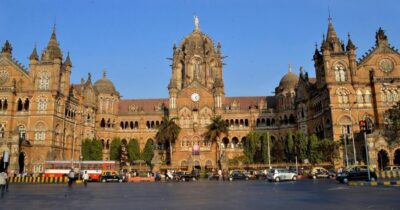

Hill-station & Heritage: Lonavala & Karla Caves Tour from Mumbai
Read our review →Browse the lists this tour appears in