
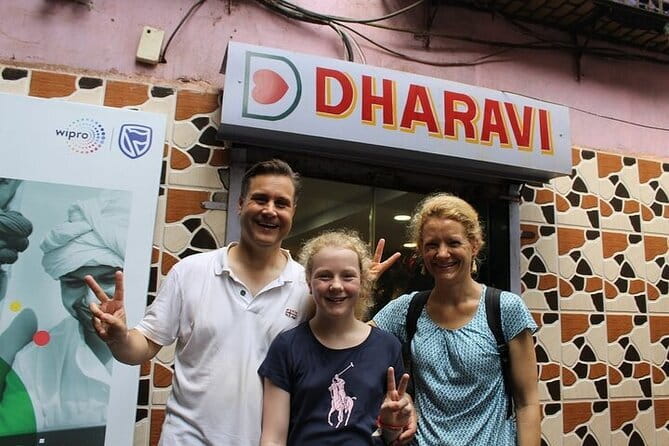
Reviewed · DHARAVI SLUM TOURS
Dharavi Slum Tour – See the real Slum with a Local Guide
Dharavi is not a place you can understand from a passing car window. On this two-hour walk, a resident guide leads you through working areas and residential lanes, showing how people earn a living, where families live, and where children play. The focus is daily life, not a movie set or a poverty spectacle.
I like two things in particular: your guide lives in Dharavi, so the tour comes with an insider’s perspective, and the route puts local work in view, from plastic recycling to leather, textiles and metalwork. At about $7.93 per person, it is also an inexpensive way to learn about a part of Mumbai many visitors otherwise see only from a distance.
One consideration: Dharavi is a lived-in neighborhood, not a museum, and the point is to observe respectfully. The walk lasts around two hours, food and drinks are not included, and the lanes may call for comfortable shoes and a flexible pace.
What to know before you go
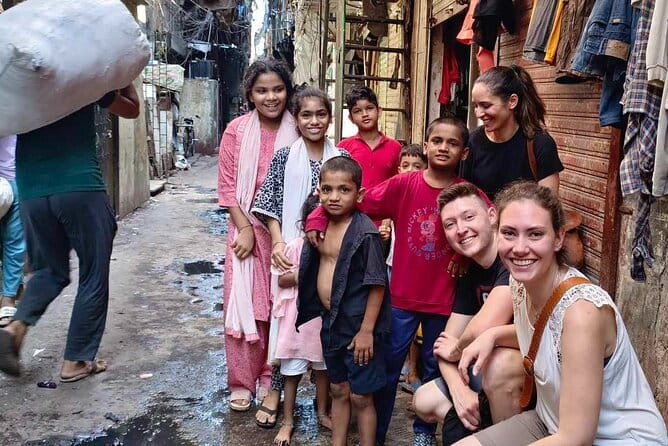
- Your guide is a Dharavi resident: The English-speaking guide lives in the area and leads you through a place they know from daily life.
- Work is central to the walk: Look for small-scale activity connected to plastic recycling, leather, garments and textiles, and metalwork.
- The tour includes residential areas: You will see where families live and where children play and relax, alongside the work spaces.
- The group is limited to 15: A smaller group can make it easier to keep up with the guide and hear explanations in narrow, active lanes.
- The film connection is part of the route: The tour visits a place in Dharavi where Slumdog Millionaire was filmed.
- It starts and ends near Mahim station: Meet at Third Wave Coffee on Senapati Bapat Marg, then return to the same point after about two hours.
A walk led by someone who lives here
Dharavi is often introduced through a single label: slum. That word can make a place sound like one uniform stretch of hardship, when the tour’s purpose is to show a more complicated reality. You walk with a resident guide who can explain how people live and work here, rather than relying on a distant view or a movie version of the neighborhood.
That local connection matters. A resident guide can put the streets and work areas in context as you move through them. The emphasis is not simply on seeing where people live, but on understanding the businesses that help sustain the community and the routines that shape everyday life.
The tour also aims to challenge the idea that Dharavi is only a place of misery. That does not mean a two-hour walk can explain every social or economic question, or that a visitor should treat the area as a feel-good lesson. It does mean you can leave with a fuller picture: one that includes work, family life and the practical ways people use the space around them.
More Dharavi tours around Mumbai:
- Dharavi slum tour in Mumbai by Female tour guides of the slum
★ 5.0 · 1,976 reviews - Mumbai: Dharavi Slum, DhobiGhat, and Dabbawallas Tour
★ 4.9 · 689 reviews - Dharavi Slum Tour
★ 5.0 · 625 reviews
From small workshops to residential lanes
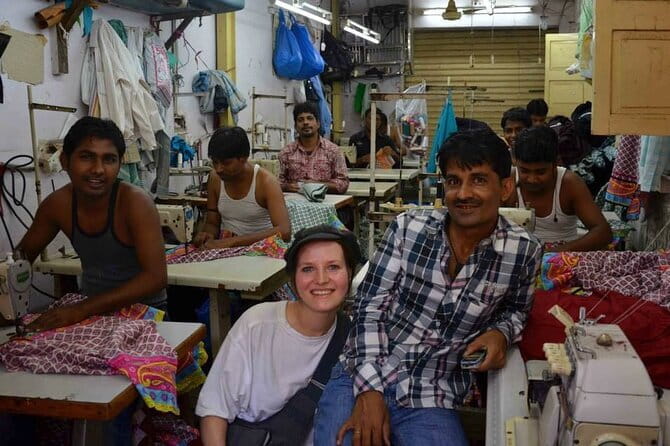
The walk is described as covering both Dharavi’s work and home life. One account of the route began in the area’s small factories, then continued into a residential part of the neighborhood. That order makes sense: seeing the workplaces first gives you an idea of how much activity sits behind the area’s public image, before the walk shifts to the streets where people live.
You may see work connected to plastic recycling, leather, garments and textiles, and metalwork. These are not presented as a polished industrial tour. The appeal is seeing small businesses in their real setting and hearing a local guide explain what people do for a living. The industries help show why Dharavi is known not only as a residential area but also as a place of production and trade.
The tour description puts the combined yearly income of Dharavi’s businesses at about $1 billion. Treat that as a broad figure, not a promise that a short walk will unpack every part of the local economy. Still, it offers useful context: the workshops are not a side note to the neighborhood. They are a major part of the story the guide wants you to see.
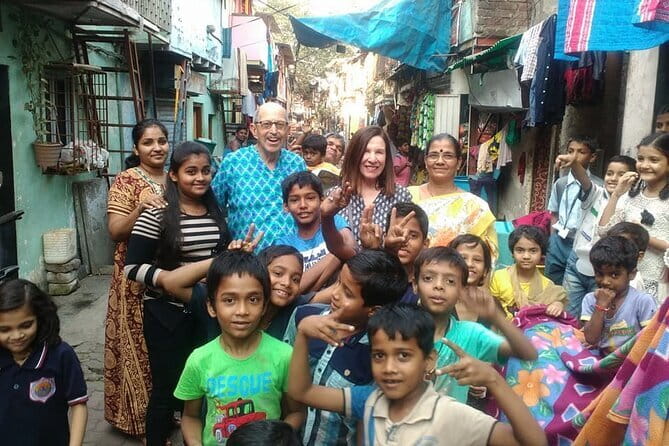
As the route moves into residential areas, the focus changes from making goods to daily routines. You can expect to see where families live and where children play and relax. The lanes are part of people’s homes and working lives, so a respectful attitude matters more than a camera-ready checklist. Follow the guide’s lead, listen, and remember that you are walking through a community, not a staged attraction.
The single review available describes a route that starts among small factories and then walks through a residential area. It praises the guide’s familiarity with the neighborhood and the insight into the workshops. That is a useful expectation to carry into the tour, though the exact sequence and what is happening in each work space can vary.
The Slumdog Millionaire connection
The walk also visits a location in Dharavi where Slumdog Millionaire was filmed. If the film is part of what brought Dharavi to your attention, this stop adds a clear point of reference. It can also prompt a useful question: how does a neighborhood that has appeared on screen compare with the lives and work you see around you?
The movie connection is a small part of a broader experience, not the whole reason to go. The more substantial value is the chance to see the residential and working areas with someone who lives there. Keep the film stop in perspective, and let the guide’s account of present-day Dharavi lead the conversation.
What the two-hour format can and cannot do
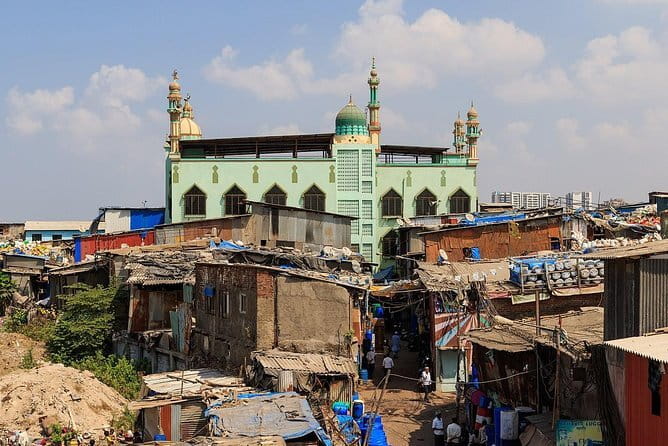
Two hours is enough for a guided introduction to several sides of Dharavi: local industries, residential spaces and the film location. It is not enough to understand every neighborhood, business or challenge in detail. Think of this as a focused first encounter, with the guide helping you notice what you might otherwise miss.
The group limit of 15 is a practical advantage. In narrow lanes and active work areas, a very large group could make it harder to hear the guide or move together. Fifteen people is still a group, so you should not expect a private visit, but the cap keeps the outing from becoming an oversized procession.
The tour is offered in English, which gives you a way to ask questions and follow explanations as you go. No guide name is provided, so you will meet the resident guide assigned to your departure. The key point is that the guide lives in Dharavi, not that you are promised a particular individual.
Wear comfortable walking shoes. No special walking requirements are stated, and most people can participate, but this is a neighborhood walk rather than a seated presentation. The tour is around two hours, so plan accordingly and bring any personal essentials you normally want for a walk. Food and drinks are not included.
More guided departures around Mumbai:
- Elephanta Caves & Island Guided Private Tour
★ 5.0 · 1,327 reviews - Group Guided Walking Tour in Fort and Colaba
★ 5.0 · 1,073 reviews - Mumbai: Elephanta Caves Half-Day Guided Tour with Expert
★ 4.8 · 1,032 reviews - Private Guided Walking Tour in Fort & Colaba
★ 5.0 · 895 reviews
Is $7.93 good value?
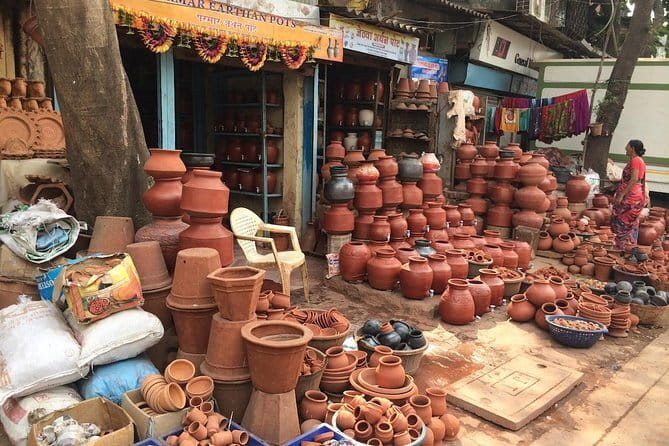
At about $7.93 per person, this is a low-cost guided experience by Mumbai tour standards, though no comparison prices are provided here. The value comes less from the length of the route than from having a local resident explain what you are seeing. Without that context, workshops and residential lanes could be easy to misread or reduce to scenery.
Admission fees are included, and the tour has no listed food or drink component. That keeps the price straightforward, but you should budget separately if you want refreshments before or after. Group discounts are available, which may help if you are booking with others.
The tour is booked, on average, about six days ahead. That is useful as a planning clue, not a guarantee that every date will fill or remain open. If the walk is important to your schedule, booking ahead is sensible. The maximum group size is 15, and the experience can also require a minimum number of participants to run.
Meeting near Mahim and planning your walk
The meeting point is Third Wave Coffee, Tip Road, Unit 58, Ground, Ram Mahal, Senapati Bapat Marg, Marinagar Colony, near Mahim station in Mumbai. The tour ends back at the same point, so you do not need to arrange a separate pickup or find your own way out of Dharavi after the walk.
The address includes several location details, so check it carefully before setting out. Public transportation is nearby, and the stated meeting point gives you a fixed place to find the guide. Allow enough time to reach it without rushing, especially if you are unfamiliar with this part of Mumbai.
The tour requires good weather. If poor weather leads to cancellation, you can be offered another date or a full refund. It may also be canceled if the minimum number of participants is not met, with a different date or experience, or a refund, offered instead. You can cancel for a full refund up to 24 hours before the start time. Inside 24 hours, the payment is not refunded, and changes are not accepted.
Who will get the most from this tour?
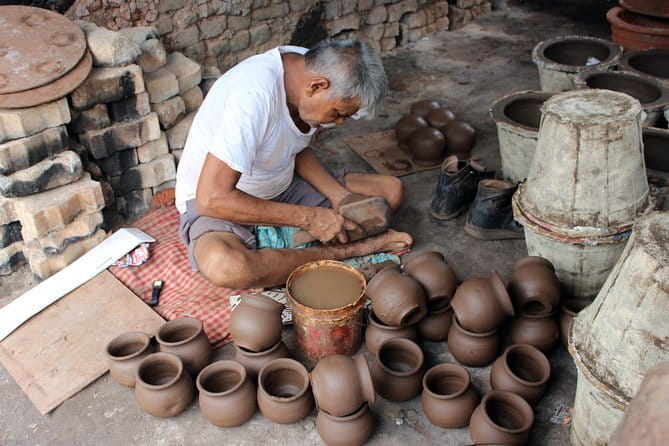
This walk suits you if you want more than a quick view of Dharavi and are willing to listen as well as look. It is especially useful if you are curious about how local businesses operate, how work and home life share limited space, or how a resident explains the neighborhood’s public image.
It may also suit you if Slumdog Millionaire sparked your interest, provided you are ready to see the film connection as just one stop. The walk is a better fit for visitors who want context than for anyone seeking a dramatic photo opportunity. Dharavi is a community first, and the experience is most worthwhile when you approach it with care.
If your time in Mumbai is very limited, two hours is a manageable commitment. If you want a deep study of the city’s economy or social conditions, this is only an introduction. You will leave with specific examples and a local perspective, not a complete account of a complex place.
Should you book it?
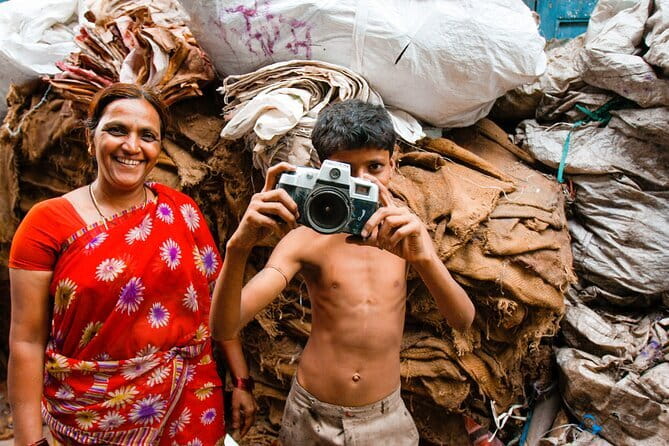
I would book this tour if you want a direct, guided introduction to Dharavi and value hearing from someone who lives there. The combination of small workshops, residential areas and the film location gives the walk several points of interest, while the modest price makes it an accessible addition to a Mumbai itinerary.
Skip it if you are uncomfortable walking through a lived-in neighborhood as an observer, or if you expect a polished attraction with a fixed show. The best reason to go is not to collect a dramatic image. It is to see the work and daily routines that a resident guide chooses to explain, and to leave with a more grounded sense of Dharavi than a movie or a label can provide.
FAQ
How long is the Dharavi tour?
The tour lasts about two hours.
How much does it cost?
The listed price is $7.93 per person. Group discounts are available.
Who leads the tour?
An English-speaking guide who lives in Dharavi leads the walk. No individual guide name is provided.
What will I see during the walk?
You will visit working and residential areas, with examples of industries including plastic recycling, leather, garments and textiles, and metalwork. The tour also visits a location where Slumdog Millionaire was filmed.
How many people can join?
The group has a maximum of 15 travelers.
Where does the tour start and finish?
It starts at Third Wave Coffee on Senapati Bapat Marg, near Mahim station, and ends back at the same meeting point.
Are food and drinks included?
No. Food and drinks are not included. Entrance fees are included.
What should I wear?
Comfortable walking shoes are recommended.
What happens if I need to cancel or the tour cannot run?
You can cancel at least 24 hours before the start for a full refund. Cancellations or changes made less than 24 hours before are not accepted. If poor weather or too few participants causes the tour to be canceled, you will be offered another date or experience, or a refund.
Just added around Mumbai
- Victorian Gothic Heritage Quarter and Art Deco Walking Tour★ 4.9 · 14 reviews
- Mumbai Airport to Mumbai Hotels : Private Transfers★ 5.0 · 13 reviews
- Private Walking Tour in Dharavi Slums★ 5.0 · 7 reviews
- Mumbai Sightseeing Tour★ 5.0 · 11 reviews
- Mumbai by Night Guided Tour★ 5.0 · 6 reviews
- Vegetarian Indian Cuisine Virtual Cooking Class Experience from Mumbai★ 5.0 · 4 reviews
- Private Mumbai 2-Day Tour Package:City + Slum & Elephanta Island.★ 5.0 · 3 reviews
- Taj Mahal Day Trip Including Same Day Flights from Mumbai★ 5.0 · 3 reviews
Dharavi Slum Tours, compared.
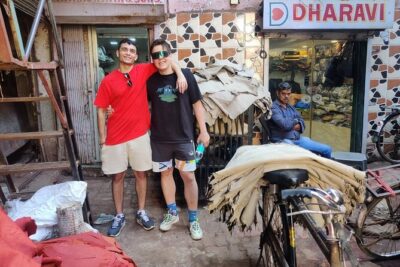
Dharavi slum tour in Mumbai by Female tour guides of the slum
Read our review →
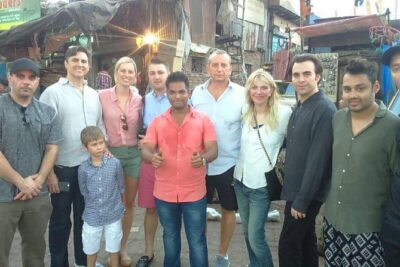

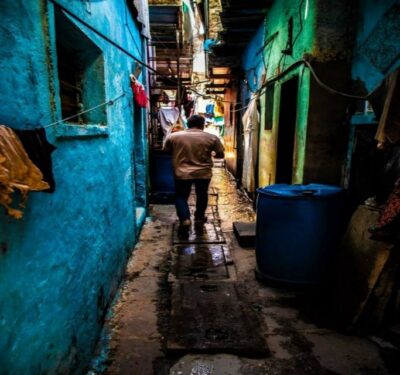
Dharavi Slum Slumdog Millionaire Tour with a Local
Read our review →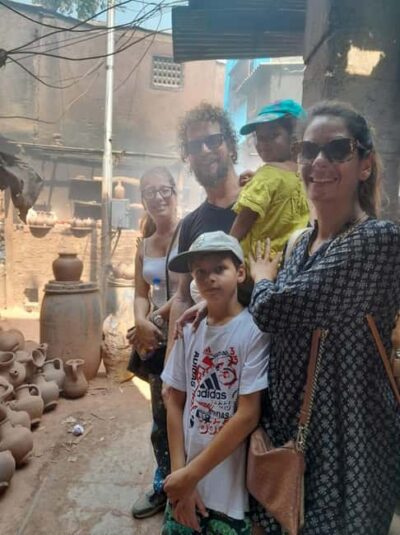
Mumbai Slum Tour – Visit Dharavi Slum with Local Guide
Read our review →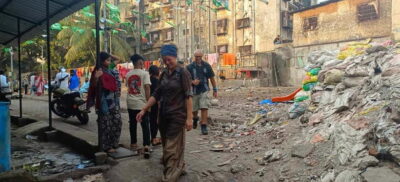
Dhobi Ghat Laundry and Dharavi Slum Tour with Local
Read our review →
Browse the lists this tour appears in