
Reviewed · DHARAVI SLUM TOURS
Mumbai: Dhobi Ghat Laundry and Dharavi Slum Tour with Local
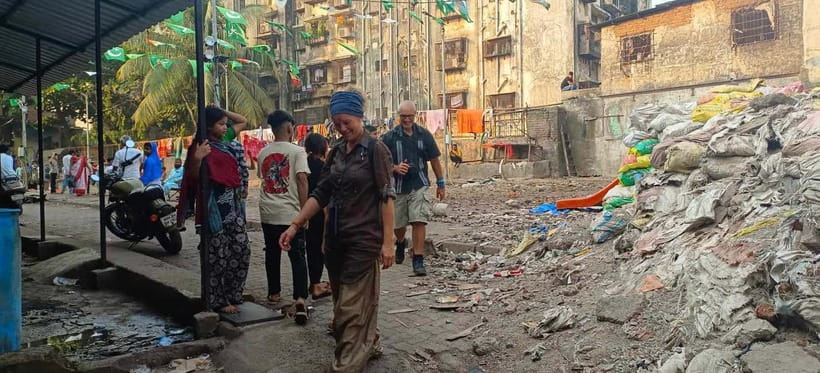
Dharavi is not a film set or a single story about poverty. It is a place where families live alongside workshops, markets and recycling businesses, and this tour lets you explore it with a guide who knows the community from the inside. You also visit Dhobi Ghat, Mumbai’s vast open-air laundry, where the work is easier to understand when someone explains the system as you look across it.
I like two things in particular: the local guide’s personal connection makes the visit more thoughtful than wandering in alone, and the contrast between Dharavi’s workshops and Dhobi Ghat’s laundry gives you a practical view of how people work across the city. Guides including Bharti, Ansh and Abi have led this route, sharing details about daily life and answering questions along the way.
One consideration: this is a visit to a residential area where people are going about their lives, not a staged attraction. You should be ready to walk through busy work and living spaces, keep a respectful distance, and avoid taking photos of people without permission.
What makes this route worthwhile
- Dharavi’s workshops show work up close: Learn about plastic recycling, garment and textile production, leather work and other small industries.
- A local guide changes the visit: Guides who grew up in or live in Dharavi can explain the community in personal terms, not just point out buildings.
- Dhobi Ghat is a working laundry: See the open-air operation and learn how its system works from a guide who can put the scale into context.
- A local train ride may be part of the route: It adds a useful piece of everyday Mumbai transport, though the exact arrangement can vary.
- Three hours gives you more than a quick look: The time allows for both residential and work areas, plus the laundry visit.
- The price is unusually low: At $4.45 per person, it is a strong value if the selected option and meeting point suit your plans.
Dharavi beyond the movie image
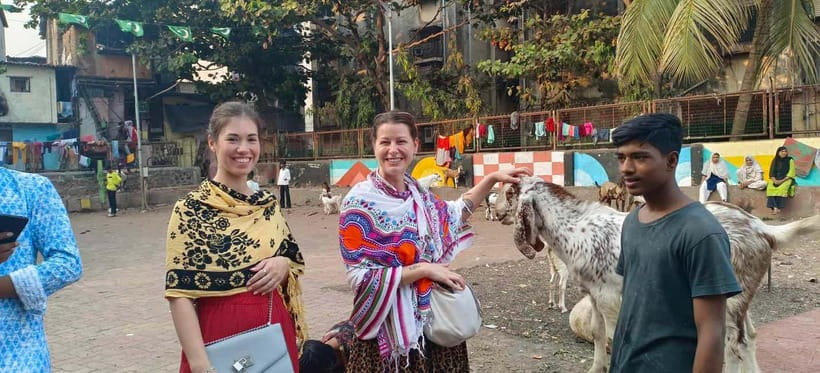
Dharavi is often reduced to a word, a headline or a film scene. This tour makes a more useful distinction: it shows you a neighborhood where people live and work, with homes, shops and small-scale industries sharing tight spaces. The guide helps explain the setting without treating residents as part of a display.
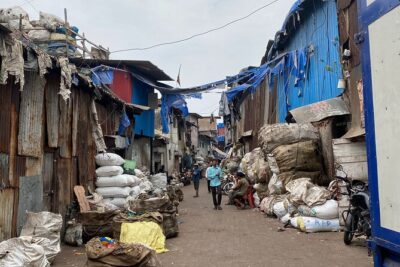
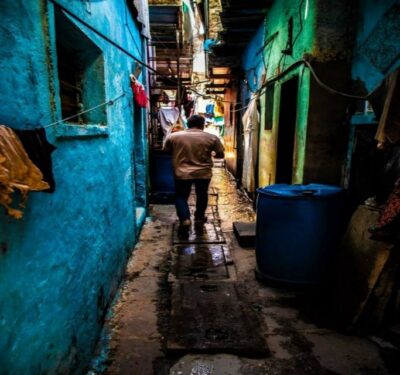
That matters because the area can be easy to misread from a brief walk. A narrow lane may lead past family homes, a workroom or a market stall. Your guide can explain how the spaces fit into daily life and why businesses operate here, while you see the neighborhood at a human pace.
The tour aims to challenge familiar stereotypes, not by pretending that life here is effortless, but by showing its variety. You learn about living arrangements, family life and work, as well as the practical ways residents make a living. The result is more informative than a distant view or a film reference alone.
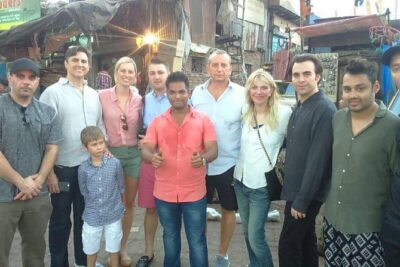
A local guide is central to the experience. Bharti, Ansh, Abi, Alkama and Faizan are among the guides associated with this route. Their connection to the area gives them a personal frame of reference, and their role is not just to lead you through the lanes, but to explain what you are seeing and answer questions.
More Dharavi tours around Mumbai:
- Dharavi slum tour in Mumbai by Female tour guides of the slum
★ 5.0 · 1,976 reviews - Mumbai: Dharavi Slum, DhobiGhat, and Dabbawallas Tour
★ 4.9 · 689 reviews - Dharavi Slum Tour
★ 5.0 · 625 reviews
Workshops, recycling and neighborhood livelihoods
The industrial side of Dharavi is one of the tour’s most revealing parts. You may see work connected to plastic recycling, garments and textiles, leather, and other trades. These are not isolated exhibits. They are businesses woven into the neighborhood, sometimes operating close to homes and shared spaces.
The recycling work is especially useful to understand in person. A guide can help you follow how discarded materials are collected and reworked, and how that activity supports livelihoods. The tour describes Dharavi’s annual business activity at about US$1 billion, a figure that gives you a sense of the scale of the local economy, even as the individual workshops may be modest in size.
You are not simply walking past industry; you are seeing a working part of the city. That brings a practical question to mind: how do people make a living in a place outsiders often describe only by its housing conditions? The guide’s explanations help connect the workshops with household needs, family routines and local commerce.
There is a trade-off. Work areas can feel crowded, and the route is not a polished museum visit. You may find some spaces noisy or close-packed, and your attention should stay on the guide and the people working nearby. That is part of the value, but it also calls for patience and respect.
Residential lanes and everyday life
The residential parts of the walk give context to the work. You can learn where families live, where children play and how people use shared spaces to relax and meet daily needs. Rather than rushing from one photo stop to another, a good guide helps you notice the ordinary details that make a neighborhood function.
Reviews of guides such as Bharti, Ansh and Abi repeatedly point to their patience with questions and care in setting the pace. That matters in a place where you may want to pause, ask what a particular business does or understand how family life and work overlap. A guide can also help you judge when to keep moving and when it is appropriate to linger.
The tour is described as safe to visit with a local guide, and many people have found the guided format reassuring. That is not a reason to treat the area casually. You are entering people’s home and work environment, so follow your guide’s lead, keep your voice measured and ask before photographing anyone. The point is to learn, not to collect images of someone else’s daily life.
If you are uneasy about the ethics of a slum tour, that hesitation is reasonable. A visit can become voyeuristic if it treats residents as scenery. Here, the local guide and emphasis on respectful conduct are important safeguards, but your own behavior matters too. Choose curiosity over gawking, and listen as much as you look.
Dhobi Ghat and the open-air laundry
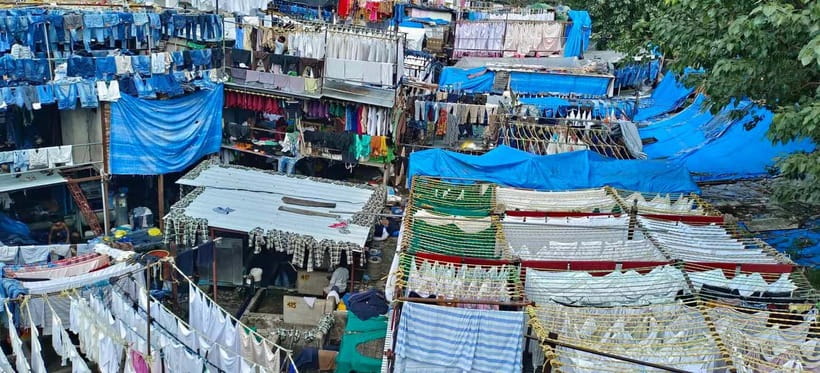
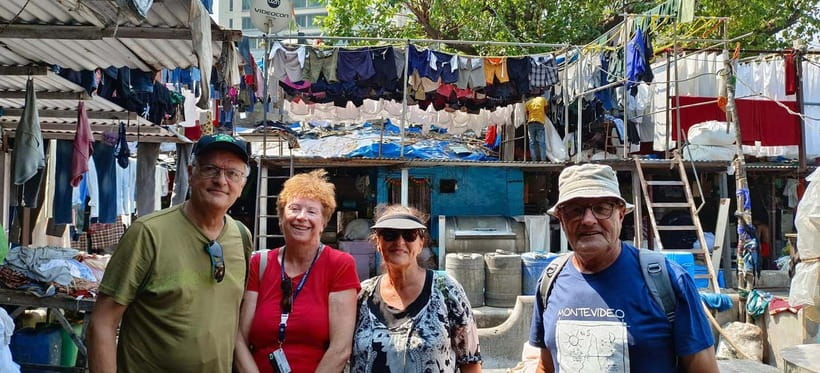
Dhobi Ghat offers a different view of Mumbai’s working life. The laundry is an open-air operation, and seeing it from close by helps you grasp its scale in a way a photograph cannot. A guide can explain how the work is organized and what you are looking at, turning a striking view into a clearer account of the system.
This stop also gives the tour a useful change of pace. Dharavi’s workshops and residential lanes show work embedded in a neighborhood; Dhobi Ghat presents a large laundry operation in one place. Together, the visits help you see that Mumbai’s daily economy runs through many kinds of labor, some highly visible and some easy to overlook.
The exact order and travel arrangements can depend on the option booked. Several routes have included a local train ride between stops, which can be a memorable part of the outing and a practical taste of city transport. Train travel is not a sightseeing ride in the usual sense, so stay close to your guide and follow instructions.
More Dhobi Ghat visits around Mumbai:
- Mumbai: Dharavi Slum and Dhobi Ghat Laundry Tour
★ 5.0 · 317 reviews - Private Combo Tours Sightseeing + Dharavi Slum + Dhobi Ghat & Dabbawalas
★ 5.0 · 245 reviews - Dharavi, Dhobighat, and Mumbai Dabbawallas
★ 5.0 · 168 reviews - Dabbawala, Dhobi Ghat & Dharavi slum Tour with Local Train Ride
★ 5.0 · 102 reviews
A three-hour walk with a local guide
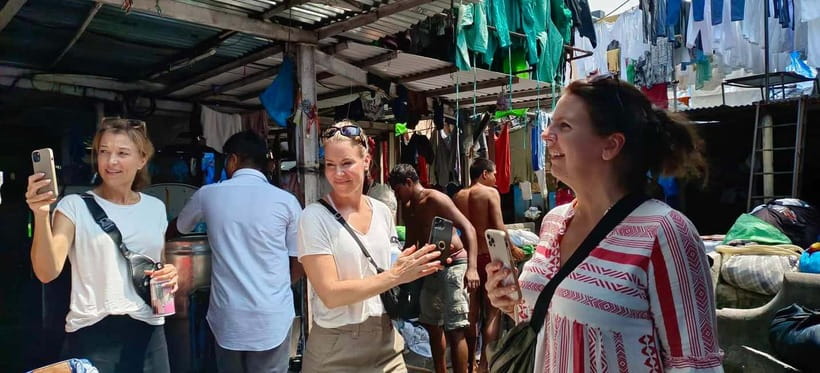
Three hours is enough time to visit both Dharavi and Dhobi Ghat without reducing either to a quick stop. The route can cover work areas, markets and residential lanes before or after the laundry visit. Because the meeting point may vary by booking option, check your confirmation carefully rather than assuming every departure starts in the same place.
The tour is offered as private or shared, with private and small-group options available. A private tour can make it easier to ask questions and adjust the pace to your interests. In a small group, you still benefit from a guide’s local knowledge, though you may need to share time and attention.
English is the stated guide language, and an optional English audio guide is also listed. Live explanation is likely to be the most useful part of this tour, since the setting raises questions that a recorded account may not address. If you have a particular interest, such as recycling, family life or the laundry’s operation, bring it up with your guide.
Walking is a central part of the experience. One guide has been praised for checking that the pace suited the group on a hot day, and another helped adjust transport when a train was delayed. These details are a reminder to wear comfortable shoes, bring water and allow some flexibility. Water is included, while food and other drinks are not.
Is $4.45 good value?
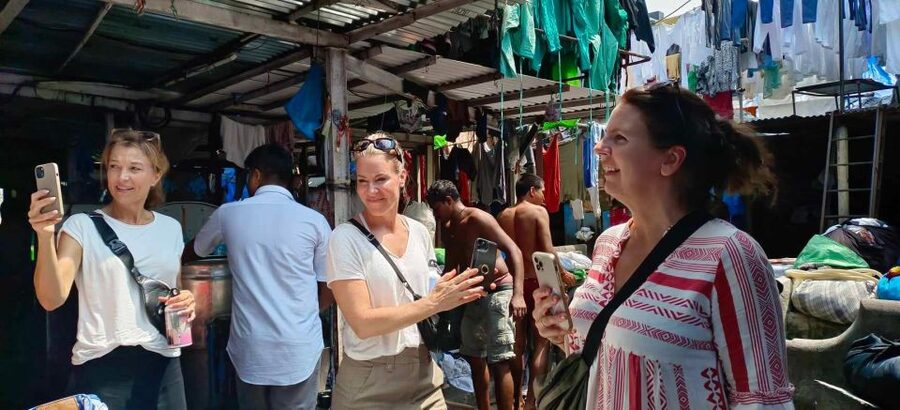
At $4.45 per person, the listed price is remarkably low for a three-hour guided visit that includes entry tickets and travel fees. You are paying for more than a route between two places: a local guide helps you understand what you see and gives you a way to ask questions in settings you might not feel comfortable navigating alone.
Value also depends on your chosen option. The tour may be private or shared, and the meeting point can vary. Check those details before booking, since they affect how personal the outing feels and how you get to the start. Food and drinks are not included, so plan for those separately if needed.
This is not a luxury outing, and the price should not lead you to expect a staged or polished attraction. Its value lies in access, interpretation and the chance to understand two working parts of Mumbai. If the subject interests you, even a short visit can add useful context to the rest of your stay.
Who will get the most from this tour?
This route suits visitors who want to understand Mumbai beyond its better-known sights. It is especially worthwhile if you are curious about informal economies, recycling, local transport or how work and home life meet in dense urban neighborhoods. The guides’ first-hand connection makes it a strong choice for anyone who wants to ask questions rather than simply take in a view.
Families can consider it too. One family visited with children aged 8 and 11 and found the guide took time to explain the area. Still, think about your own children’s comfort with crowded working spaces and the subject matter. This is a real neighborhood, not a child-focused attraction.
Solo visitors may also find the guided format helpful. The small-group and private options offer company and local direction, and the guide can help you make sense of the route. If you want a quiet, hands-off sightseeing experience, this may not be the best fit. It is a walking tour built around conversation and close observation.
Should you book it?
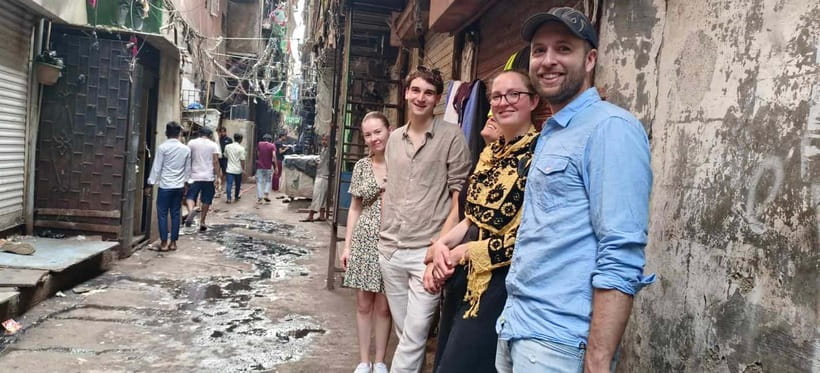
Book this tour if you want a thoughtful, local-led look at Dharavi’s homes and industries, paired with the scale of Dhobi Ghat’s open-air laundry. It offers strong value, especially for the price, and a guide such as Bharti, Ansh or Abi can make the visit far more meaningful than an unaccompanied walk.
Skip it if you are mainly looking for a conventional sightseeing stop, dislike crowded lanes or are not comfortable visiting a residential area. If you do go, bring questions, keep your camera use considerate and give the guide room to set the pace. The best reason to book is not to see a place people call a slum, but to understand the lives and work that the label leaves out.
FAQ
How long is the tour?
The tour lasts three hours.
What places does the tour visit?
It visits Dharavi and Dhobi Ghat, including Dharavi’s residential and work areas and the open-air laundry.
What kinds of work might I learn about in Dharavi?
The tour covers businesses such as plastic recycling, garment and textile production, leather work and other local industries.
Is the tour led by a local guide?
Yes. It includes a live English-speaking local guide. Guides associated with the tour include Bharti, Ansh, Abi, Alkama and Faizan.
Is the tour private or shared?
Both formats are available. Private or small-group options may be offered, depending on what you book.
Is a train ride included?
A local train ride has been part of the route for some groups. Check the details of your selected option, since arrangements may vary.
Are food and drinks included?
No. Food and drinks are not included. Water is included.
What is included in the price?
The listed inclusions are a local English-speaking guide, entry tickets, travel fees and water.
Just added around Mumbai
- Victorian Gothic Heritage Quarter and Art Deco Walking Tour★ 4.9 · 14 reviews
- Mumbai Airport to Mumbai Hotels : Private Transfers★ 5.0 · 13 reviews
- Private Walking Tour in Dharavi Slums★ 5.0 · 7 reviews
- Mumbai Sightseeing Tour★ 5.0 · 11 reviews
- Mumbai by Night Guided Tour★ 5.0 · 6 reviews
- Vegetarian Indian Cuisine Virtual Cooking Class Experience from Mumbai★ 5.0 · 4 reviews
- Private Mumbai 2-Day Tour Package:City + Slum & Elephanta Island.★ 5.0 · 3 reviews
- Transfer from Mumbai Airport to Hotel★ 4.0 · 7 reviews
Dharavi Slum Tours, compared.
Dharavi slum tour in Mumbai by Female tour guides of the slum
Read our review →
Dharavi Slum Slumdog Millionaire Tour with a Local
Read our review →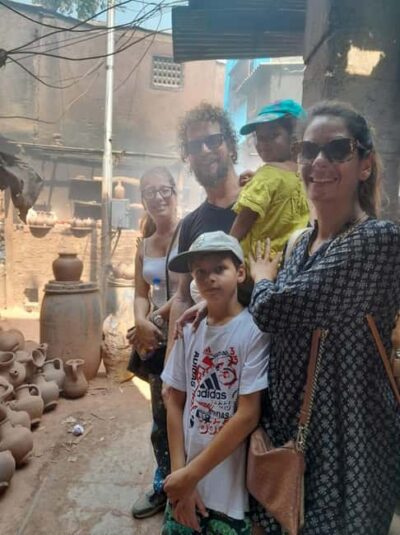
Mumbai Slum Tour – Visit Dharavi Slum with Local Guide
Read our review →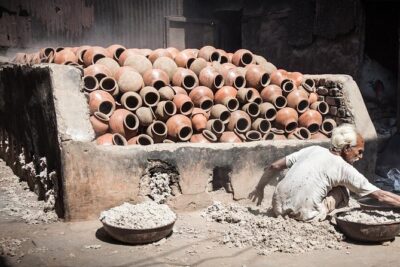

Private Full-Day Mumbai Sightseeing Tour with Dharavi Slums
Read our review →Browse the lists this tour appears in