
Reviewed · DHARAVI SLUM TOURS
Dharavi Slum Walking Tour: Mumbai’s Inspiring Small Industries
Dharavi is not a place to observe from a distant lookout. On this two-hour walk, you move through working areas and narrow residential lanes, seeing the recycling, garment making, leather workshops and pottery that form part of everyday life here. A local guide gives the visit context that a quick drive past could never provide.
I like two things in particular: you get to see both the small industries and the residential side, and the walk includes Kumbharwada, Dharavi’s pottery colony. The private format also means the group is limited to your own party, so you can ask questions as you go.
The close-up nature of the walk is also its main consideration. Some lanes are very narrow, and the tour brings you into places where people live and work. If you would rather see Dharavi from a distance, or want most of the time spent in residential areas rather than industry, this may not be the right fit.
- A two-hour walk through Dharavi: See working and residential areas with a local guide.
- Small-scale work up close: The route includes recycling and manufacturing, along with garment, leather and pottery work.
- Kumbharwada pottery colony: Visit a distinctive part of Dharavi where pottery is made.
- Private for your group: You are not sharing the activity with other parties.
- Starts and ends at Third Wave Coffee: The meeting point is on Senapati Bapat Marg, near Mahim.
- Optional transfers: A hotel pickup and drop-off option is available, with a city sightseeing option also mentioned.
A close look at Dharavi’s working life
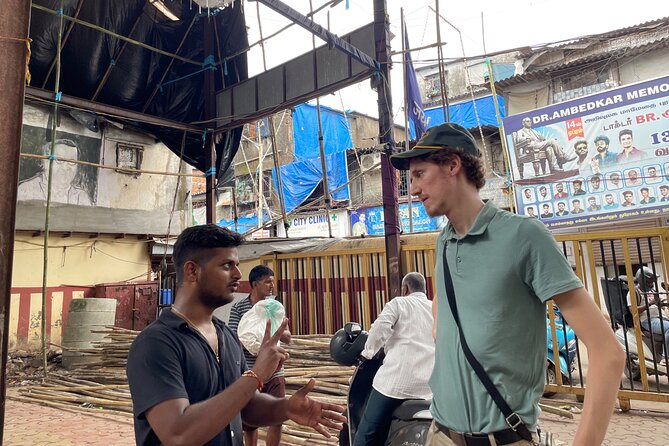
Dharavi is often reduced to a single label, but this walk asks you to look beyond it. You see a place where homes and small businesses exist side by side, and where recycling, manufacturing and craft work are part of the local economy. The point is not to treat the neighborhood as a spectacle, but to understand how people make a living and how daily life fits into a densely built area.
The tour begins with the commercial side. You may see plastic, cardboard and aluminum recycling, garment production and other small-scale manufacturing. These are not polished showrooms arranged for visitors. They are working spaces, which makes the visit more revealing, but also calls for care and respect as you walk through.
The guide helps connect what you see with the people and businesses behind it. Past guides have included Sharon and Ruqaiyya. One visitor described Ruqaiyya as a resident of Dharavi, which can bring a particularly direct perspective to the walk. Sharon has also led tours praised for detailed explanations and a friendly manner. You cannot assume either guide will lead your departure, but the importance of a good local guide is clear: the neighborhood makes more sense when someone can explain its daily rhythms and history.
Start at Third Wave Coffee on Senapati Bapat Marg
The meeting point is Third Wave Coffee, Unit 58, Ground, Ram Mahal, Senapati Bapat Marg, in Marinagar Colony near Mahim. The walk ends back at the same place, so you do not need to plan for a different finish point or a transfer across town after the tour.
The activity lasts about two hours. That is enough time for a focused introduction to the commercial and residential sides, but it is not a full-day visit or an exhaustive account of Dharavi. Think of it as a compact, guided walk that gives you a more grounded picture than a passing glimpse from a vehicle.
Public transportation is nearby, according to the tour information. If you choose an option with hotel pickup and drop-off, that can make the day easier, especially if you are pairing the walk with city sightseeing. Check the exact option you select before booking, since transfers are not described as part of every version.
More Dharavi tours around Mumbai:
- Dharavi slum tour in Mumbai by Female tour guides of the slum
★ 5.0 · 1,976 reviews - Mumbai: Dharavi Slum, DhobiGhat, and Dabbawallas Tour
★ 4.9 · 689 reviews - Dharavi Slum Tour
★ 5.0 · 625 reviews
Recycling and manufacturing in motion
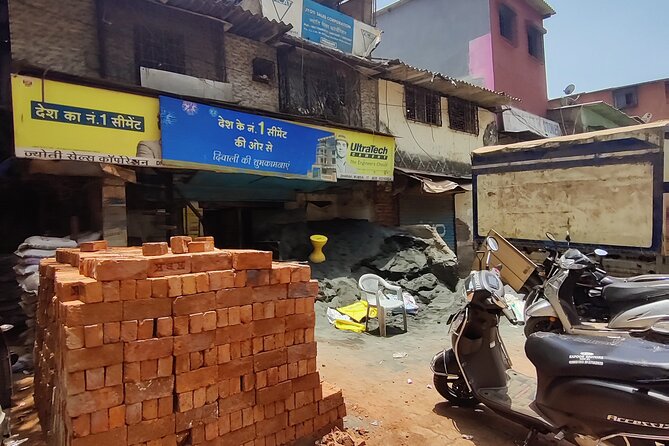
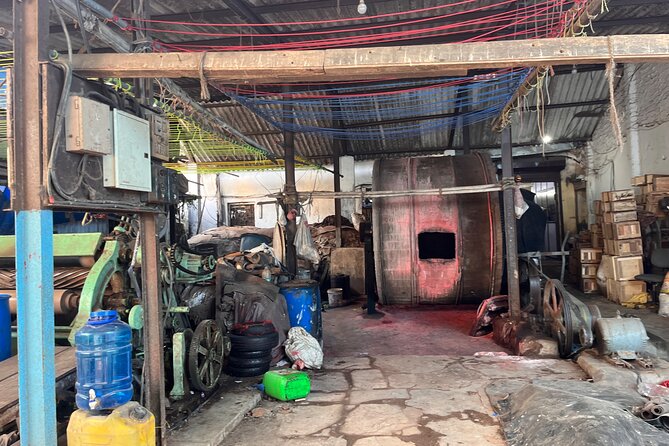
The first part of the walk focuses on Dharavi’s commercial activity. You may see materials such as plastic, cardboard and aluminum being handled for recycling, alongside small manufacturing and garment work. The useful thing here is the scale: these are local enterprises operating in close quarters, not large industrial plants set apart from the neighborhood.
I like that the route starts with work, because it shifts the focus from an image of poverty to the practical systems and skills that support livelihoods. You can see how production happens in tight spaces and how different kinds of work occupy the same area. Your guide can provide context as you pass, so the activity is not just a sequence of unfamiliar workshops.
There is a trade-off in the emphasis. One person who took the walk felt the industrial portion could be shorter in favor of more time among homes. That is a useful point to consider if your main interest is domestic life and community rather than business activity. The route covers both, but its commercial section is a substantial part of the experience.
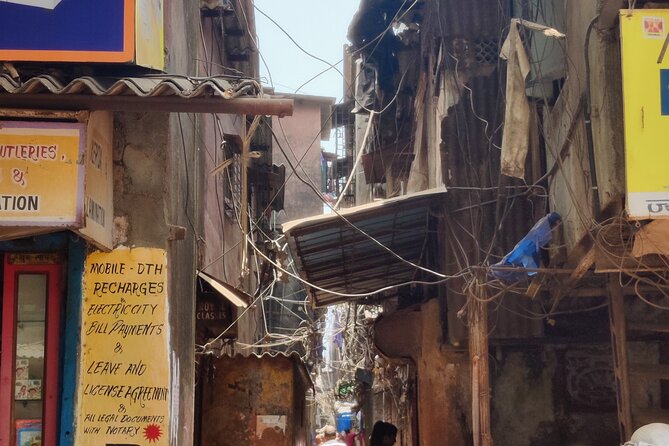
You should also expect the walk to feel close and immediate. A visitor described some alleys as only about two feet wide. That detail gives you a sense of the setting, though the exact route and space can vary. If narrow lanes make you uneasy, or you prefer a broad view with plenty of room around you, be realistic about whether this style of visit suits you.
Residential lanes, homes and workshops
After the commercial area, the walk turns toward the residential side. Small-roofed homes sit among government and private buildings, and the tour passes leather workshops as well as other places where work and home life intersect. The transition matters: it shows that Dharavi is not divided neatly into a factory district and a separate housing district.
You are walking through a lived-in neighborhood, not a museum. That makes the experience more direct, but it also means you should follow your guide’s lead and stay attentive to the people around you. You are there to learn, not to interrupt someone’s day. Ask before photographing residents or workers, even though the tour information says you can take photos during the walk.
The private format is helpful here. Only your own group participates, so you do not have to keep pace with a large crowd, and you can ask the guide questions as they arise. It does not mean you will have unlimited time at every stop, but it does make the walk more personal than a large group outing.
The strongest guide feedback centers on clarity, warmth and local knowledge. Sharon was appreciated for in-depth explanations and a friendly approach. Ruqaiyya was described as personable and proud of the area where she lives. Those qualities are especially valuable on a walk like this, where your guide’s judgment shapes what you notice and how you interpret it.
Kumbharwada’s pottery colony
Kumbharwada is a distinctive stop within Dharavi and one of the tour’s clearest points of difference. The pottery colony adds a craft tradition to the picture of local work, alongside recycling, leather and textiles. Rather than seeing Dharavi only through its manufacturing activity, you get a chance to encounter pottery as another part of its working life.
The visit is included in the walking route, so you do not need to arrange a separate excursion to reach it. Still, the tour is only about two hours, and the information does not promise a hands-on pottery session or a chance to make anything yourself. Go expecting to observe and learn, not to take part in a workshop.
For many people, this stop will be a welcome change of pace from the industrial areas. If pottery is your main interest, however, keep expectations measured: the tour presents Kumbharwada as one part of a broader walk, not as a pottery-focused experience.
More walking tours around Mumbai:
- Group Guided Walking Tour in Fort and Colaba
★ 5.0 · 1,073 reviews - Private Guided Walking Tour in Fort & Colaba
★ 5.0 · 895 reviews - Private Guided Walking Tour in Bandra Queen of Suburbs
★ 5.0 · 383 reviews - Private Guided Spiritual Walk in Banganga Hindu Temples
★ 5.0 · 271 reviews
What the $9.51 price buys you
At about $9.51 per person, the listed price is low for a private, guided experience in Mumbai. The value is not about covering a long distance or ticking off a string of attractions. It comes from having a local guide lead you through a complex neighborhood, explain its work and residential life, and include Kumbharwada in a short visit.
Because the tour is private for your group, the price is particularly appealing if you are traveling with others and can share the cost. Group discounts are also listed. Check the price for your date and party size, and confirm whether your preferred option includes hotel transfers or city sightseeing. Those additions may affect what you pay.
The short duration is both an advantage and a limit. Two hours is manageable within a busy Mumbai day, and it gives you a focused introduction without asking you to devote a full day. But you should not expect to understand every part of Dharavi in that time. The guide’s explanation and the route’s range are what make this brief visit worthwhile.
Who will appreciate this walk
I would choose this tour if you want to understand how people live and work in Dharavi, rather than simply see it from the outside. It suits curious visitors who are comfortable walking through narrow lanes and who are willing to listen, ask thoughtful questions and respect the fact that this is a neighborhood first.
It is also a good match if you are interested in small businesses and the ways people earn a living. The range of recycling, garment, leather and pottery work gives you several angles on the local economy. The residential portion then places that work within the setting of homes, local buildings and everyday routines.
It may be less suitable if you want a distant overview, dislike close quarters, or are mainly interested in residential life. The walk includes a meaningful commercial section, and one person who preferred more time in the housing areas felt the industrial portion took up too much of the visit. That is a matter of preference, but worth knowing before you book.
Practical details before you go
The tour starts and ends at Third Wave Coffee on Senapati Bapat Marg. It lasts about two hours, and confirmation is provided at booking. The activity is described as private, with only your group participating. Most people can take part, and the meeting point is near public transportation.
A hotel pickup and drop-off option is available. There is also an option that includes city sightseeing, but the exact inclusions depend on the choice you make. Check those details when selecting your ticket rather than assuming transport is part of the basic price.
The cancellation terms are flexible up to a point: you can cancel at least 24 hours before the start time for a full refund. Cancellations made less than 24 hours in advance are not refunded, and late changes are not accepted. Cut-off times follow local time in Mumbai.
Should you book the Dharavi walk?
Book it if you want a guided, up-close introduction to Dharavi’s small industries, residential lanes and Kumbharwada pottery colony. At around $9.51 for two hours, it offers strong value, especially for a group that wants a private walk and a local guide’s perspective.
Skip it if you prefer to observe from a distance, or if you want the visit to focus mainly on homes rather than industry. If you go, bring curiosity and a respectful approach. This is a working neighborhood, and the most rewarding way to see it is to pay attention to both the work and the people who live there.
FAQ
How long is the Dharavi walking tour?
The tour lasts about two hours.
Where does the tour start and end?
It starts at Third Wave Coffee, Unit 58, Ground, Ram Mahal, Senapati Bapat Marg, in Marinagar Colony near Mahim. It ends back at the same meeting point.
Is the tour private?
Yes. It is described as a private activity, with only your group participating.
What will I see during the walk?
The route covers commercial and residential areas, including recycling and manufacturing, garment work, leather workshops and Kumbharwada pottery colony.
Are hotel transfers included?
A hotel pickup and drop-off option is available. Transfers are not specified as part of every option, so check the details for the ticket you choose.
Can I cancel for a refund?
You can cancel at least 24 hours before the start time for a full refund. Cancellations made less than 24 hours before the tour are not refunded.
Just added around Mumbai
- Victorian Gothic Heritage Quarter and Art Deco Walking Tour★ 4.9 · 14 reviews
- Mumbai Airport to Mumbai Hotels : Private Transfers★ 5.0 · 13 reviews
- Private Walking Tour in Dharavi Slums★ 5.0 · 7 reviews
- Mumbai Sightseeing Tour★ 5.0 · 11 reviews
- Mumbai by Night Guided Tour★ 5.0 · 6 reviews
- Vegetarian Indian Cuisine Virtual Cooking Class Experience from Mumbai★ 5.0 · 4 reviews
- Private Mumbai 2-Day Tour Package:City + Slum & Elephanta Island.★ 5.0 · 3 reviews
- Taj Mahal Day Trip Including Same Day Flights from Mumbai★ 5.0 · 3 reviews
Dharavi Slum Tours, compared.
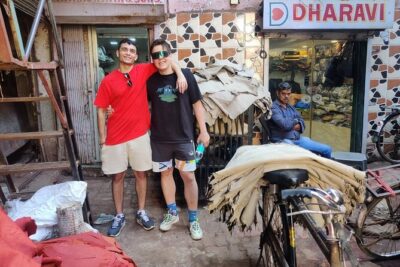
Dharavi slum tour in Mumbai by Female tour guides of the slum
Read our review →
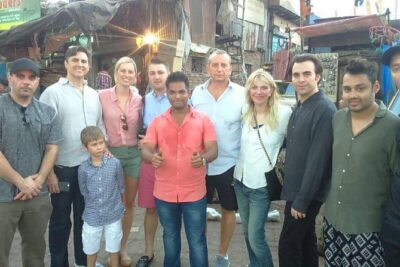

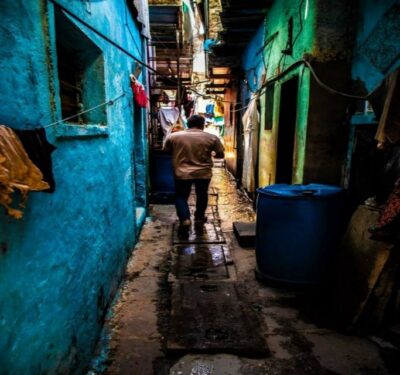
Dharavi Slum Slumdog Millionaire Tour with a Local
Read our review →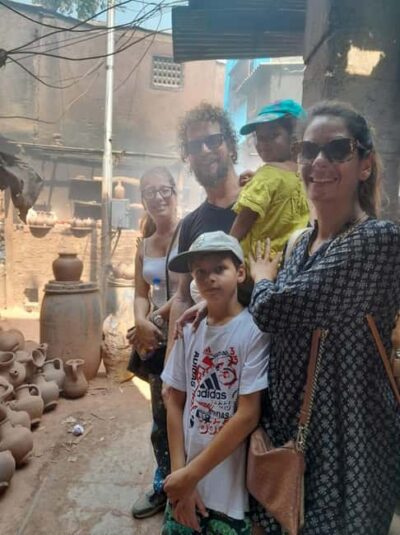
Mumbai Slum Tour – Visit Dharavi Slum with Local Guide
Read our review →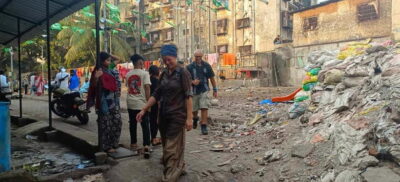
Dhobi Ghat Laundry and Dharavi Slum Tour with Local
Read our review →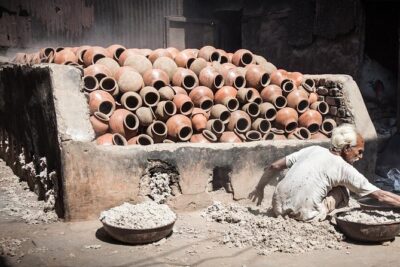
Browse the lists this tour appears in