
Reviewed · DHARAVI SLUM TOURS
Walking Tour of Dharavi Slum in Mumbai
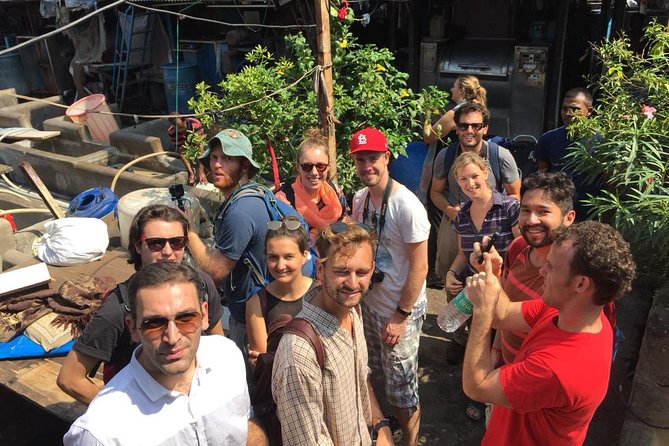
Dharavi is not just a place to look at from the edge of a Mumbai train window. On this guided walk, you enter its lanes and learn how workshops, homes, and places of worship fit into a dense, working neighborhood of almost one million people.
I like two things in particular: the chance to see small industries at work, from plastic recycling to pottery, and the local guide’s ability to explain the neighborhood from the inside. Guides named Ganesh, Alam, and Dawood have led tours, though your guide may be someone else.
The main consideration is that this is a visit to people’s homes and workplaces, not a staged attraction. You’ll need to respect requests about photography, dress modestly, and be comfortable walking through crowded areas. The tour is short, but the subject calls for attention and care.
What makes this walk worth considering
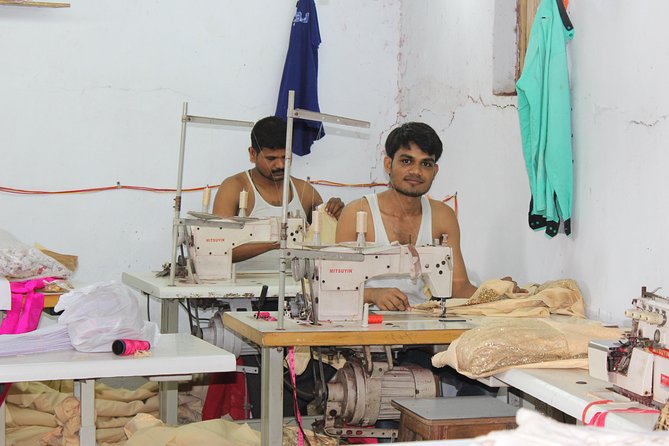
- Workshops bring the neighborhood’s economy into view: You may see recycling, leather work, pottery, embroidery, or soap-making in compact spaces.
- A local guide provides context: The walk is led by someone who can explain daily life and help you approach the area respectfully.
- Dharavi’s communities share the same streets: Temples, mosques, and churches reflect the neighborhood’s mix of residents from across India.
- The group is capped at 15: A small group can make it easier to hear the guide and move through narrow lanes.
- Photography is restricted in some places: Be ready to put your phone away when asked.
- The price is about $12 per person: That is modest for a guided walk, though hotel transport and refreshments are not included.
Go beyond the word slum
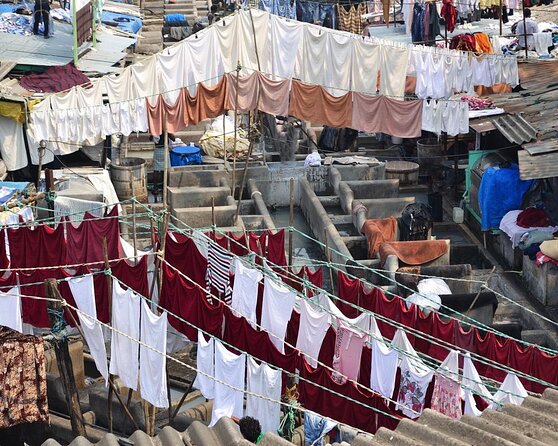
The word slum can flatten a place into a label. This walk offers a more specific view: Dharavi is a dense neighborhood where people live, worship, work, and run small businesses. The guide’s commentary helps you understand those parts together rather than treating the visit as a look at poverty.
Dharavi is described as having almost one million residents and as Asia’s largest slum neighborhood. The exact figure is best taken as an estimate, but the scale is clear in the close-packed streets and the range of activity you encounter. People from many parts of India live here, and the mix is visible in the neighborhood’s religious sites and working communities.
That context matters. Without it, a visitor can mistake activity for spectacle and people’s daily lives for something arranged for an audience. A local guide gives you a way to ask questions, understand what you are seeing, and follow local expectations.
I would approach the walk with curiosity, not a camera-first mindset. Some locations do not allow photography, and the guide may ask you to avoid taking pictures to protect residents’ privacy. Follow those instructions without debate. The point is to see and learn, not to collect images.
More Dharavi tours around Mumbai:
- Dharavi slum tour in Mumbai by Female tour guides of the slum
★ 5.0 · 1,976 reviews - Mumbai: Dharavi Slum, DhobiGhat, and Dabbawallas Tour
★ 4.9 · 689 reviews - Dharavi Slum Tour
★ 5.0 · 625 reviews
Start near Mahim Station
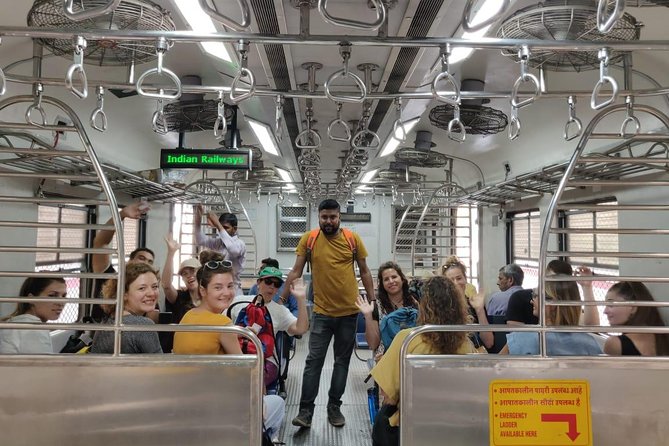
The tour begins in the Mahim area, near Mahim Station (West). The listed meeting point is Third Wave Coffee at Tip Road, Unit No. 58, Ground, Ram Mahal, Senapati Bapat Marg, Marinagar Colony, Mahim. Another description places the meeting outside Cafe Coffee Day near the station, so check your booking details before setting out and confirm the exact café.
Mahim is near public transportation, which makes this tour practical to reach without arranging a private car. Hotel pickup and drop-off are not included, so plan your route to the meeting point yourself and allow time to find the guide.
The tour is offered in the morning, according to the meeting instructions. It lasts about 90 minutes to two hours, with the main Dharavi walk taking around an hour and a half and the industry stops adding time. That is long enough for a useful introduction, but not a full day in the neighborhood.
The group limit is 15 people. Smaller groups can make it easier to hear explanations in tight lanes, and the guide may have more room to respond to questions. If you happen to be the only person booked, the walk may feel more tailored; one guide has been described as adjusting the pace and timing for a solo group.
Follow the work through Dharavi’s lanes
The first and longest part is a walking tour through Dharavi. Rather than presenting the neighborhood as one uniform place, the guide points out the range of small-scale businesses and explains how they operate within limited space. The value is in seeing work as part of ordinary daily life, not as an exhibit built for visitors.
Plastic recycling is one of the activities that has made a strong impression on people taking the walk. You may see parts of the recycling process and learn how materials are handled in a confined workshop setting. The contrast between the compact work areas and the amount of activity they support gives the guide’s explanation real, physical detail.
The tour may also pass workshops for embroidery and soap-making. These stops show that Dharavi’s economy is not limited to one trade or one kind of work. The industries vary, and the precise route or businesses you visit may depend on the day and local conditions.
This is where a guide’s commentary matters most. A workshop viewed in silence can be hard to interpret, and a quick glance rarely explains the steps, skills, or constraints involved. A local guide can connect what you see to how people earn a living and how the neighborhood functions.
See leather work and pottery up close
Leather work is identified as one of Dharavi’s most prominent industries. The tour includes a short stop of about 10 minutes focused on leather, where you can observe part of this trade and hear how it fits into the local economy. Do not expect an extended factory visit; the stop is brief and part of a wider walk.
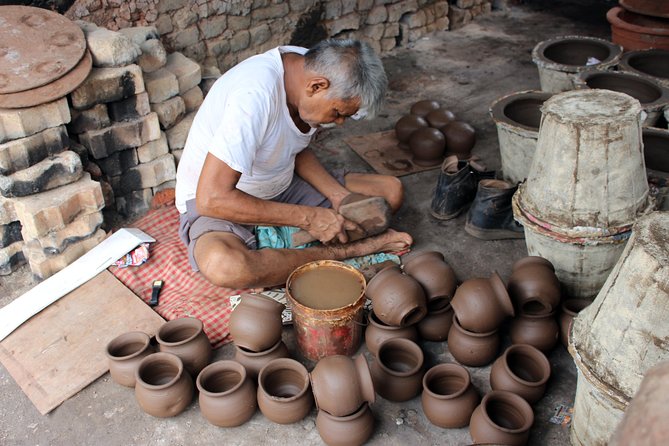
Pottery is another notable stop, also listed at about 10 minutes. The neighborhood’s pottery makers produce and sell their work, and the visit gives you a look at a different kind of small business from the recycling and leather operations. The itinerary’s stop label repeats the leather name, but its description identifies pottery, so think of it as a pottery visit rather than a second leather stop.
The short stops are a practical trade-off. You get a broad look at several industries in under two hours, but you will not have time to examine every process in depth or linger at each workshop. If you are especially interested in one trade, ask your guide questions as you go.
More walking tours around Mumbai:
- Group Guided Walking Tour in Fort and Colaba
★ 5.0 · 1,073 reviews - Private Guided Walking Tour in Fort & Colaba
★ 5.0 · 895 reviews - Private Guided Walking Tour in Bandra Queen of Suburbs
★ 5.0 · 383 reviews - Private Guided Spiritual Walk in Banganga Hindu Temples
★ 5.0 · 271 reviews
Notice the community, not just the workshops
Dharavi is a place of work, but it is also home. The walk highlights a sense of community and the presence of temples, mosques, and churches near one another. Those details make the visit more than an industrial tour and help show how a diverse neighborhood shares a small area.
A respectful visit depends on how you move through it. Wear clothes that are not very short, keep your voice and behavior considerate, and follow the guide’s directions. You are walking through lived-in spaces, so avoid blocking doorways or treating residents as part of the scenery.
Photography is not allowed in certain locations. The restriction is an important part of the tour, not a minor inconvenience to work around. Keep your phone away when requested, and ask before taking pictures anywhere else rather than assuming that a public lane means permission.
The tone of the walk is intended to challenge common assumptions about slum life. That does not mean presenting hardship as something to romanticize. A useful tour can show enterprise and community while still recognizing that the area has real limits and challenges. Listen for the guide’s perspective, and leave room for the complexity of what you see.
What the $12 price covers
At around $12 per person, the tour is an accessible way to get guided access to a neighborhood that can be difficult to understand on your own. The fee includes a local guide, whose explanations and route are the core of the experience. Group discounts are available, and mobile tickets are offered.
The price does not include food, drinks, or hotel transport. Bring water, particularly if you prefer not to rely on a shop stop during the walk. One guide has paused at a shop so the group could buy bottled water, but that should not be treated as a guaranteed service.
Value here is not measured by the number of famous sights. It comes from having someone explain the work, community, and local etiquette while you walk through a place that is not arranged as a visitor attraction. If your priority is a polished tour with guaranteed access to named workshops, this may feel less predictable. If you want a short, guided introduction to everyday urban life, the price is reasonable.
The tour is often booked about 33 days ahead, so it is sensible to plan early if your Mumbai dates are fixed. You can cancel for a full refund up to 24 hours before the start time. Changes or cancellations inside that window are not accepted or refunded.
Who will get the most from this walk
This tour suits you if you want to understand Mumbai beyond its main landmarks and are willing to listen as well as look. It is especially useful for people interested in urban life, small businesses, recycling, or how communities function in limited space. The local guide is the key: previous guides have included Ganesh, Alam, and Dawood, but the person leading your walk is not guaranteed to be one of them.
It can also suit families with older children. Children must be at least five and accompanied by an adult. The walk requires a moderate level of physical fitness, so consider whether your group is comfortable walking through a dense neighborhood for up to two hours.
This is not the best fit if you want an easy sightseeing loop, extensive photo opportunities, or a visit built around shopping. Some photography is restricted, the tour is on foot, and the focus is on work and community rather than souvenirs or landmark stops.
Should you book the Dharavi walk?
Book it if you want a grounded introduction to Dharavi led by someone who can explain what you are seeing. The combination of small industries, local context, and a short walking route makes it a worthwhile use of a couple of hours in Mumbai, especially at roughly $12.
Skip it if you are uncomfortable walking through residential and working areas, or if you expect the guide to promise access to particular workshops. Go with an open mind, modest clothing, water, and respect for photography limits. You will get more from the walk by paying attention to how people work and live than by trying to turn the neighborhood into a collection of pictures.
FAQ
How long does the Dharavi walking tour last?
It lasts approximately 90 minutes to two hours. The main walk is about an hour and a half, with short stops for leather work and pottery.
Where does the tour start?
The meeting point is in the Mahim area near Mahim Station (West), at the listed Third Wave Coffee address. The meeting instructions also refer to Cafe Coffee Day near the station, so check your booking details to confirm the exact spot.
Where does the tour end?
The walk ends opposite Sai Multispeciality Hospital & Research Centre on 90 Feet Road in Dharavi.
What is included in the price?
A local guide is included. Hotel pickup and drop-off, food, and drinks are not included.
How much does the tour cost?
The listed price is $12 per person. Group discounts are available.
Is photography allowed during the walk?
Photography is not allowed at certain locations. Follow the guide’s instructions and respect residents’ privacy.
Can children join the tour?
Yes. Children must be at least five years old and accompanied by an adult.
How large is the group, and how much walking is involved?
The maximum group size is 15. The tour is on foot and is intended for people with a moderate level of physical fitness.
Can I cancel for a refund?
You can cancel at least 24 hours before the start time for a full refund. Cancellations or changes made less than 24 hours before the tour are not accepted, and the payment is not refunded.
Just added around Mumbai
- Victorian Gothic Heritage Quarter and Art Deco Walking Tour★ 4.9 · 14 reviews
- Mumbai Airport to Mumbai Hotels : Private Transfers★ 5.0 · 13 reviews
- Private Walking Tour in Dharavi Slums★ 5.0 · 7 reviews
- Mumbai Sightseeing Tour★ 5.0 · 11 reviews
- Mumbai by Night Guided Tour★ 5.0 · 6 reviews
- Vegetarian Indian Cuisine Virtual Cooking Class Experience from Mumbai★ 5.0 · 4 reviews
- Private Mumbai 2-Day Tour Package:City + Slum & Elephanta Island.★ 5.0 · 3 reviews
- Transfer from Mumbai Airport to Hotel★ 4.0 · 7 reviews
Dharavi Slum Tours, compared.
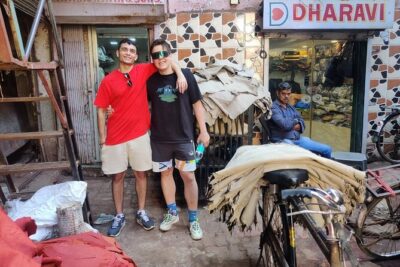
Dharavi slum tour in Mumbai by Female tour guides of the slum
Read our review →
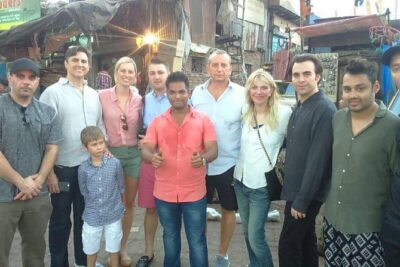

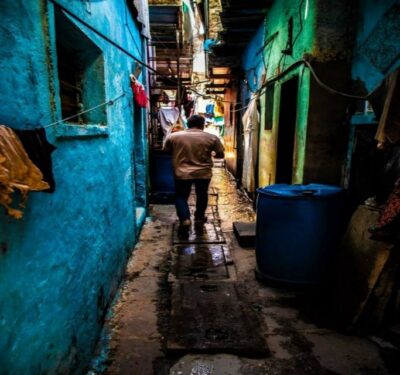
Dharavi Slum Slumdog Millionaire Tour with a Local
Read our review →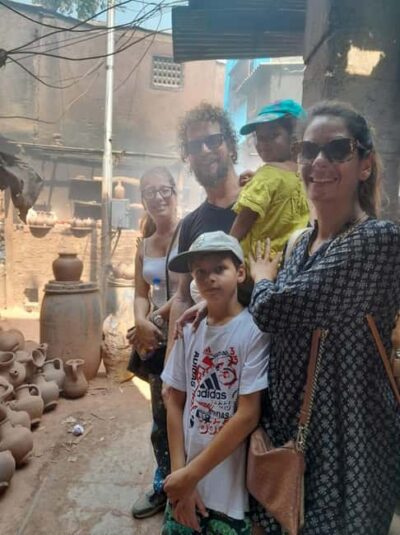
Mumbai Slum Tour – Visit Dharavi Slum with Local Guide
Read our review →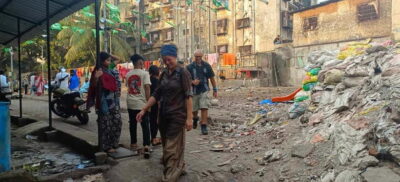
Dhobi Ghat Laundry and Dharavi Slum Tour with Local
Read our review →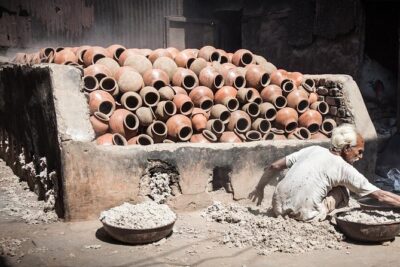
Browse the lists this tour appears in