
Reviewed · DHARAVI SLUM TOURS
Dabbawala, Dhobi Ghat & Dharavi slum Tour with Local Train Ride
Dharavi is not a sight to peer at from a distance. On this four-hour Mumbai tour, you walk its lanes with a resident guide, hear about work and home life, and see small industries alongside schools and hospitals. Then the city’s laundry operation and lunch-delivery network add two more working parts of Mumbai to the picture.
I like two things in particular: the resident guide, whose local ties can help make a sensitive visit feel more personal and respectful, and the local train ride, which makes getting between neighborhoods part of the experience. The small-group limit of 15 should also leave room to ask questions.
One consideration: Dharavi is a residential neighborhood, not a staged attraction. Come ready to listen and follow your guide’s lead, and do not expect every stop or encounter to feel like a photo opportunity. The tour is active, so bring water and wear comfortable shoes.
- Dharavi gets about two hours: See residential lanes and learn about work in leather, pottery, soap, baking, dyeing, and plastic recycling.
- Dhobi Ghat is a working open-air laundry: Allow about an hour to take in the rows of washing stations and the scale of the operation.
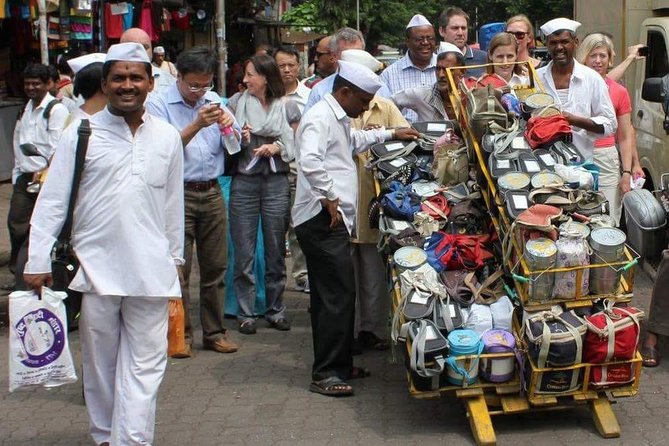
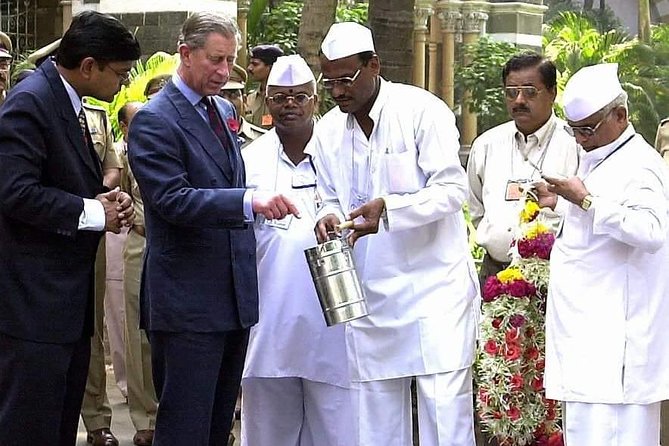
- Dabbawalas are part of Mumbai’s daily rhythm: Learn how lunch carriers serve the city, with a stop at the Dabbawala Tribute Statue.
- The local train is included: It offers a practical glimpse of how you move around Mumbai between stops.
- A resident guide sets the tone: Guides named by participants include Rakesh, Abhishek, Sagar, Dinesh, and Hardik. Your assigned guide may differ.
- The price is $35.79 per person: For four hours, three distinct subjects, a guide, and train transport, it is a useful way to cover ground with context.
A four-hour look at Mumbai’s working life
This is a compact tour with a broad subject: how people live and work in Mumbai. Dharavi, Mahalaxmi Dhobi Ghat, and the dabbawala network each show a different side of that daily effort. You are not just being taken to three locations; you are being given a guide to what happens there and why it matters.
That context is especially valuable in Dharavi. The word slum can invite a narrow picture of poverty, but the tour’s focus on homes, schools, hospitals, and local industries helps show a more complicated place. It is a neighborhood where people live and earn a living, not a set built for visitors.
The experience runs about four hours and has a maximum group size of 15. That is small enough to make questions and conversation more practical than they would be in a large walking group, though the exact feel depends on the day and your guide.
Walking through Dharavi with a resident guide
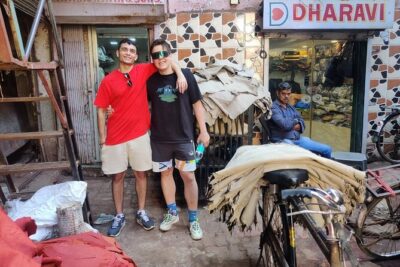
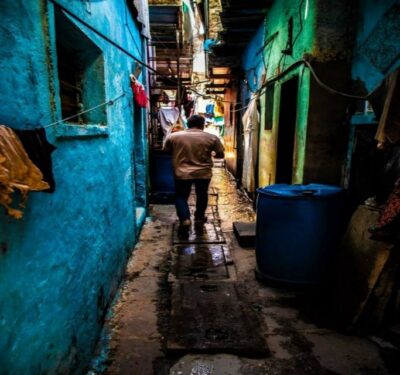
The Dharavi portion lasts about two hours, the longest stop on the tour. You walk through streets and narrow lanes with a local guide and learn about both residential life and work. The listed subjects include leather production, pottery, soap making, bakeries, colour dyeing, and plastic recycling, as well as homes, schools, and hospitals.
This mix matters. The workshops and small businesses show how much of the neighborhood’s life is tied to work, while the residential details make clear that these are ordinary streets for the people who live there. Your guide can help explain what you are seeing and how the different parts of the community fit together.
Some of the lanes are small, so listen to instructions and keep your belongings close. The tour is a walk, not a vehicle-based visit, and comfortable shoes will make the time on foot easier. Bring water, too: one useful piece of advice from a past participant was not to set out without it.
The film Slumdog Millionaire was shot in Dharavi, and that connection is part of the tour’s stated highlights. But it is worth keeping the film in perspective. The more useful reason to come is to understand the neighborhood beyond a movie image, through the industries and daily routines your guide explains.
A resident guide can make the visit feel less like looking in from outside. Sagar, for example, was described as having grown up in Dharavi, and one participant’s visit included a welcome at his family home and a homemade meal. That is a personal experience, not a standard part of the tour, so do not book expecting a home visit. The larger point is that local guides may bring relationships and personal knowledge that a visitor could not easily gain alone.
The sensitive question is how to observe without turning people’s lives into a spectacle. Keep your attention on what the guide is explaining, be considerate around residents, and ask before taking close-up photos. The tour is most worthwhile when you approach it with curiosity and respect rather than a checklist of dramatic sights.
More Dharavi tours around Mumbai:
- Dharavi slum tour in Mumbai by Female tour guides of the slum
★ 5.0 · 1,976 reviews - Mumbai: Dharavi Slum, DhobiGhat, and Dabbawallas Tour
★ 4.9 · 689 reviews - Dharavi Slum Tour
★ 5.0 · 625 reviews
Seeing the scale of Mahalaxmi Dhobi Ghat
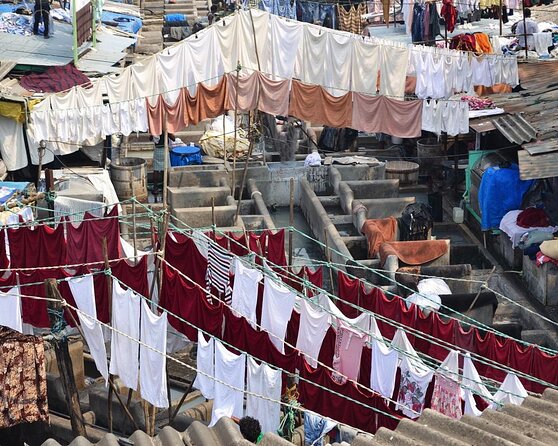
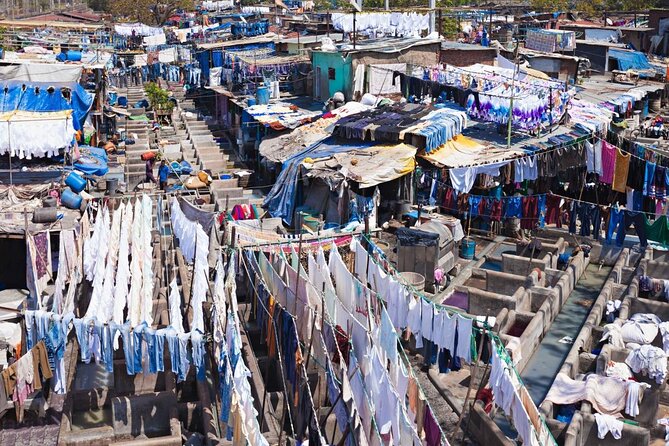
Dhobi Ghat is an open-air laundry where washers, known locally as dhobis, handle clothes from Mumbai hotels and other sources. The tour allows about an hour here. The site’s scale is the first thing to take in: this is not a few wash basins tucked behind a shop, but a large operation carried out in the open.
The stop gives you a look at a working system, and the guide can help explain how the laundry operates. That practical detail makes the visit more revealing than simply viewing the rows of washing stations. It also connects to the tour’s larger theme: Mumbai depends on networks of people doing essential work, often in ways that are easy to overlook from the street.
The main drawback is that this is a place of work. You are there to observe an active operation, not to take part in it, and what you see may depend on what is happening during your visit. Treat the hour as a chance to understand the process rather than expecting a show arranged for a group.
For many people, Dhobi Ghat will be one of the most memorable stops because the work is so visible. I like that it adds a distinct subject to the tour rather than repeating the neighborhood walk. After Dharavi’s many kinds of local enterprise, the laundry gives you another view of how labor is organized across the city.
Learning how Mumbai’s dabbawalas deliver lunch

The dabbawala stop introduces the people who deliver packed lunches around Mumbai. You visit the Dabbawala Tribute Statue and hear about the delivery system and the role these workers play in city life. The tour description also promises a chance to meet dabbawalas, though the precise encounter can depend on timing and circumstances.
This is a valuable stop because it adds movement and coordination to the tour’s picture of work. Dharavi shows businesses and homes at neighborhood scale; Dhobi Ghat shows a large laundry operation; the dabbawalas point to a citywide service built around getting meals to people. You get a sense of how much everyday life depends on practical systems that a visitor might not notice otherwise.
The listed time for this stop is about an hour. In some accounts of the route, the group first sees the dabbawalas near Churchgate before taking the train onward. The published stop order lists Dharavi first, followed by Dhobi Ghat and the statue, so the precise sequence may vary. The important practical point is that the tour links the subjects by train and on foot.
Do not assume that the statue itself is the main event. Its value is as a starting point for understanding the people and delivery work behind the name. Your guide’s explanations and the chance to see the city’s transport system in use are what give this stop its meaning.
Riding Mumbai’s local train between stops
Local train transport is included, and it is a practical part of the four-hour route. Instead of spending the whole tour in a car, you travel as people do on the city’s rail network. That makes the ride a useful window onto Mumbai’s daily movement as well as a way to connect the stops.
For some visitors, the train is a highlight in its own right. It adds a little bustle to the day, and it helps you understand the distance between the places you are visiting. It also makes the tour feel connected to the city rather than sealed off from it.
The train is public transport, so expect a more everyday experience than a private transfer. Stay with your group and follow the guide’s directions, especially when boarding and leaving. The operator includes transport by local train, but food and drink are not included, so plan to carry water.
The listed meeting point is on Maharshi Karve Road near Churchgate, and the tour ends in Dharavi, near 90 Feet Road. That start and finish are in different parts of Mumbai, so think ahead about how you will get back to your hotel or next stop. The tour does not list return transport as an inclusion.
More Dhobi Ghat visits around Mumbai:
- Mumbai: Dhobi Ghat Laundry and Dharavi Slum Tour with Local
★ 5.0 · 469 reviews - Mumbai: Dharavi Slum and Dhobi Ghat Laundry Tour
★ 5.0 · 317 reviews - Private Combo Tours Sightseeing + Dharavi Slum + Dhobi Ghat & Dabbawalas
★ 5.0 · 245 reviews - Dharavi, Dhobighat, and Mumbai Dabbawallas
★ 5.0 · 168 reviews
What the guide can add to the visit
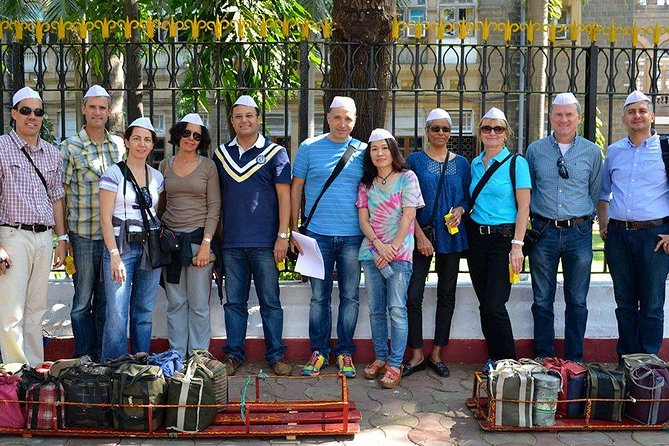
The guide is central to this experience. The subject matter is sensitive, the neighborhoods are busy, and the value comes partly from understanding what you are seeing. Past guide names include Rakesh, Abhishek, Sagar, Dinesh, and Hardik, but you should not assume a particular person will lead your departure.
The guides associated with the tour have been praised for clear explanations, friendliness, humor, and the ability to answer questions. Those qualities matter here. A good guide can help you feel at ease while also keeping the visit grounded in the lives and work of local people.
It is also worth remembering that the tour is not a substitute for independent reading or a full study of Mumbai. Four hours gives you a strong introduction, not the whole story. If a topic catches your interest, make a note of it and follow up later rather than expecting every question to fit into a short visit.
Is $35.79 good value?
At $35.79 per person, you get an approximately four-hour guided experience, local train transport, and visits focused on three very different parts of Mumbai. Food and drink are extra. The group is capped at 15, which can help keep the walk personal without making this a private tour.
I see the value in the range of subjects covered. You could visit these places on your own, but you would have a harder time connecting them to each other or understanding the local work behind them. The guide is not an optional extra here; the explanations are a large part of what you are paying for.
The tour is also relatively short for the number of topics it covers. That is an advantage if you have limited time in Mumbai, but it means you should expect an introduction rather than a slow, exhaustive visit. If you want to spend a full day in Dharavi or explore every subject in depth, this is not that kind of outing.
Who should book this tour?

This tour suits curious visitors who want a closer look at daily life and work in Mumbai, and who are comfortable walking through residential areas with a guide. It should appeal especially to people who want more than landmark photographs and are willing to listen, ask thoughtful questions, and adjust their expectations.
It may be less suitable if you are uncomfortable with narrow lanes, public transport, or visiting a residential neighborhood as part of a guided group. You should also consider whether you are prepared to approach the Dharavi stop with care. The aim is to learn about a community, not to treat people’s homes as scenery.
The operator says most people can participate, but the experience involves walking and a local train ride. If you have a specific concern about your ability to take part, check with the provider before booking rather than assuming every part will be easy.
Should you book it?
Book this tour if you want a compact, guided introduction to Dharavi, Dhobi Ghat, and the dabbawala system, and you value local explanation as much as the sights themselves. The combination of a resident guide, working sites, and train travel makes the four hours feel usefully connected.
Skip it if you want a passive sightseeing trip, a private vehicle, or a guaranteed visit to a guide’s home. Go with comfortable shoes, water, an open mind, and respectful habits, and you will be better prepared to get something meaningful from the visit. The price is reasonable for the time and range covered, particularly if you want help making sense of what you see.
FAQ
How long is the tour?
The tour lasts approximately four hours. The listed time is about two hours in Dharavi, one hour at Dhobi Ghat, and one hour for the dabbawala stop.
What is included in the price?
The price includes a guide and transport by local train. Food and drink are not included.
How large is the group?
The maximum group size is 15 travelers.
Where does the tour start and end?
It starts on Maharshi Karve Road near Churchgate and ends near 90 Feet Road in Dharavi.
Will I meet a specific guide?
The guide can vary. Names associated with the tour include Rakesh, Abhishek, Sagar, Dinesh, and Hardik, but a particular guide is not guaranteed.
What will I see in Dharavi?
The walk covers local industries such as leather work, pottery, soap making, baking, dyeing, and plastic recycling, as well as residential lanes, homes, schools, and hospitals.
Is the tour suitable for most people?
The tour information says most travelers can participate. It includes walking and local train transport, so wear comfortable shoes and bring water.
More local train rides around Mumbai
- Mumbai: Dharavi Slum and Dhobi Ghat Tour with Train Ride
★ 5.0 · 9 reviews - Primmum Mumbai Sightseeing With Local Train Ride Experience
★ 5.0 · 7 reviews - Mumbai City + Dabbawala aka Lunchbox + Train Ride Tour – The Unfeigned Mumbai.
★ 5.0 · 6 reviews - Mumbai: Dhobi Ghat Tour with Dharavi and Train Ride Options
★ 3.4 · 5 reviews
More dabbawala tours around Mumbai
- Mumbai Gems: 2-Day Private Tour with Elephanta, Slum & Dabbawala
★ 5.0 · 63 reviews - Mumbai Dharavi Slum, Dhobi Ghat & Dabbawala Lunchbox Tour
★ 5.0 · 43 reviews - Local Transport & Dabbawallah Tour
★ 5.0 · 40 reviews - All in one Combo of City ,Slum,Dhobighat & Dabbawala tour
★ 5.0 · 34 reviews
Just added around Mumbai
- Victorian Gothic Heritage Quarter and Art Deco Walking Tour★ 4.9 · 14 reviews
- Mumbai Airport to Mumbai Hotels : Private Transfers★ 5.0 · 13 reviews
- Private Walking Tour in Dharavi Slums★ 5.0 · 7 reviews
- Mumbai Sightseeing Tour★ 5.0 · 11 reviews
- Mumbai by Night Guided Tour★ 5.0 · 6 reviews
- Vegetarian Indian Cuisine Virtual Cooking Class Experience from Mumbai★ 5.0 · 4 reviews
- Private Mumbai 2-Day Tour Package:City + Slum & Elephanta Island.★ 5.0 · 3 reviews
- Taj Mahal Tour From Cruise Port, Mumbai, Cochin and Goa★ 5.0 · 8 reviews
Dharavi Slum Tours, compared.
Dharavi slum tour in Mumbai by Female tour guides of the slum
Read our review →

Dharavi Slum Slumdog Millionaire Tour with a Local
Read our review →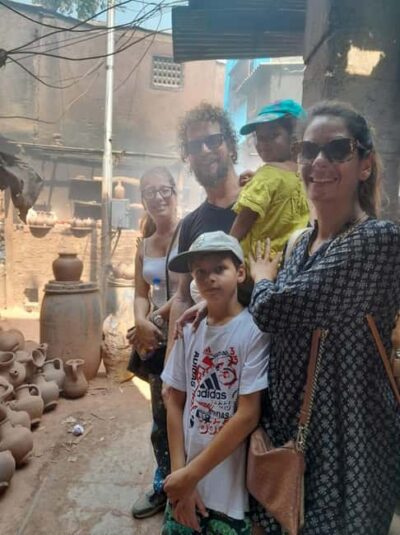
Mumbai Slum Tour – Visit Dharavi Slum with Local Guide
Read our review →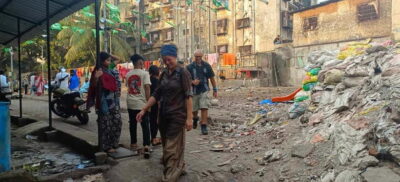
Dhobi Ghat Laundry and Dharavi Slum Tour with Local
Read our review →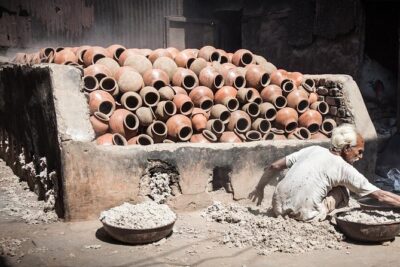
Browse the lists this tour appears in