
Reviewed · DHOBI GHAT TOURS
Dhobi Ghat Guided Tour A walk inside the biggest open air Laundry
Mumbai’s Dhobi Ghat is a working laundry on a scale that’s hard to grasp until you see its rows of washing troughs and drying spaces. I like that the tour connects this everyday work to the families who do it, and that a guide can explain how washing, drying, and pressing fit together.
I also like the small-group limit of 15 and the central meeting point at Mahalaxmi Station. One caution: some of the supplied tour information describes Elephanta Caves and ferry tickets instead, so confirm with Mumbai Dream Tours that you are booking the Dhobi Ghat walk before paying.
- A working laundry, not a staged attraction: See a place where clothes are processed for people across Mumbai.
- Family work in view: Learn how different family members may handle washing, drying, and pressing.
- Hand work and machines: Some families use machines, but much of the work is still done by hand.
- English-speaking guide: The guide explains the site and answers questions during the visit.
- Small group: The maximum group size is 15, and the tour starts and ends at Mahalaxmi Station.
Dhobi Ghat Is a Workplace First
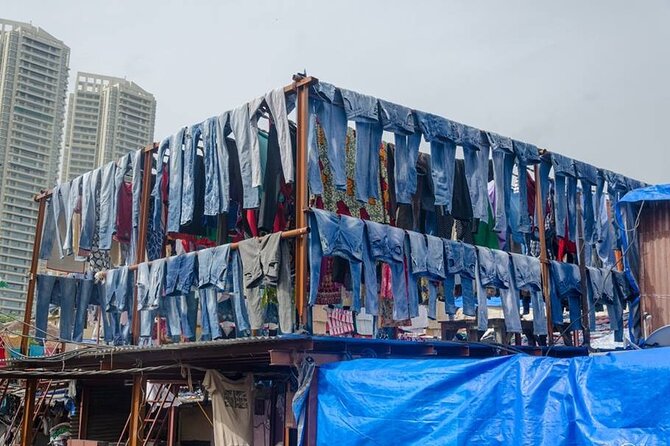
Mahalaxmi Dhobi Ghat is Mumbai’s largest open-air laundry and has operated for more than a century. It is not a museum set up to show an old trade. It is a place where dhobi families work through the day, cleaning laundry brought from across the city.
That distinction shapes the visit. You are looking at a working process, not a performance arranged for a tour group. The guide’s role is to help you understand what you are seeing and how the work is divided, while you remain mindful that people are going about their jobs.
The scale is part of the appeal. Laundry arrives dirty and leaves clean, dry, and pressed, with each stage requiring time and effort. A visitor standing at the edge may see rows of activity, but the guide can help explain the steps and the people behind them.
What the Guided Walk Can Show You

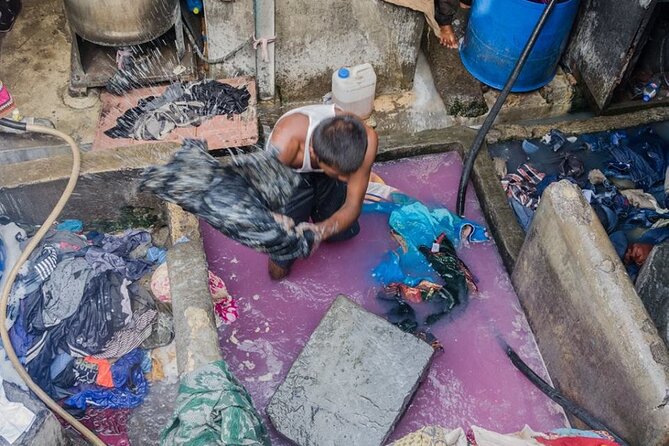
The tour focuses on how laundry is handled at Dhobi Ghat. You can expect to learn about washing clothes in troughs, hanging them out to dry, and pressing them with bulky charcoal irons. Some families also use machines, so the site is not a frozen picture of the past. It combines traditional labor with modern equipment.
The work may be divided among family members. One person may handle washing, another the drying, and someone else the pressing. That division gives you a clearer sense of the effort behind a clean shirt or a crisp piece of clothing, and of how this trade functions as a family livelihood.
The guide can also explain the history and significance of the laundry. That context matters because the site is more than an unusual view of clothes and wash basins. It offers a glimpse into a long-running part of Mumbai’s working life and the people whose labor serves households and businesses across the city.
There is no detailed stop-by-stop route provided, so it would be unwise to expect a set sequence of specific areas or demonstrations. The experience is best understood as a guided look around the facility, with the guide’s explanations and your questions shaping what you notice.
More Dhobi Ghat visits around Mumbai:
- Mumbai: Dharavi Slum, DhobiGhat, and Dabbawallas Tour
★ 4.9 · 689 reviews - Mumbai: Dhobi Ghat Laundry and Dharavi Slum Tour with Local
★ 5.0 · 469 reviews - Mumbai: Dharavi Slum and Dhobi Ghat Laundry Tour
★ 5.0 · 317 reviews
Why the Guide Makes a Difference
Without explanation, a large laundry can be visually striking but hard to read. You may notice the troughs, clotheslines, and irons, but still wonder who does each task, how the work is organized, and what has changed over time. An English-speaking guide helps turn those details into a story about work and family life.
Rakesh is one guide who has led this tour. He was described as friendly and open, and as someone who explained the site clearly, answered questions, and gave the group time rather than rushing it. Guides can vary, of course, but those are useful qualities to look for in an experience where conversation adds much of the value.
If you want to get the most from the walk, ask questions. You might ask which tasks are still done by hand, where machines have entered the process, and how family members divide the work. The available information does not promise specific answers or demonstrations, but the tour is designed to provide an explanation of the laundry and its significance.
Reading the Work, Not Just the View

The most memorable part may be noticing how many steps stand between a pile of dirty clothes and a neatly pressed garment. Washing is only one stage. Clothes must also be dried and pressed, and the information about the site describes people carrying out those jobs as part of a family work pattern.
The charcoal irons are a detail worth watching for. They are bulky tools used to press clothes after washing and drying. Their presence alongside machines hints at a trade that has adapted without losing every older method.
At the same time, keep your expectations grounded. A visitor described a very short visit and felt that much of the work had shifted to machines. That is a real consideration: the amount of visible hand work may vary, and the tour should not be booked on the assumption that every task is carried out in an old-fashioned way.
The machine use does not erase the value of the place, but it does affect what you may see. Think of Dhobi Ghat as a living workplace in transition, rather than a guaranteed display of manual washing from start to finish.
The Honest Drawback: A Working Site Can Be Uneven
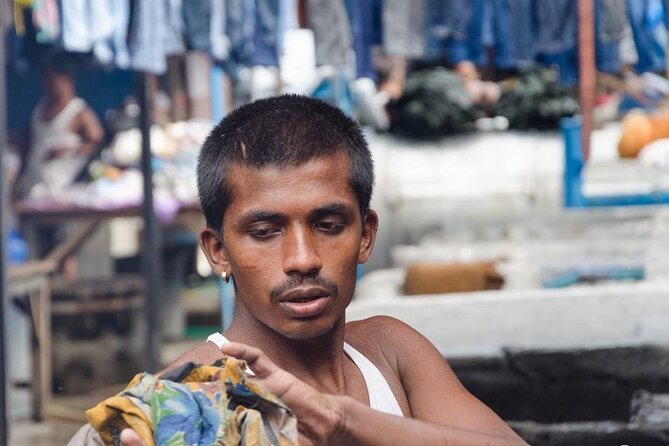
The chief risk is that the visit may feel brief or less active than you expect. One person felt the tour lasted only about 15 minutes and found little to see because machines had taken over much of the work. Others valued the guide’s explanations and the unhurried atmosphere. Those very different experiences suggest that the quality of the visit can depend on what is happening at the site and how much the guide adds.
This is not the right choice if you need a long, hands-on activity or a guaranteed demonstration. The information does not promise that you will wash clothes, meet particular workers, or see every stage in operation. You are visiting a real workplace, and what is happening there may shape the experience.
The tour’s stated duration needs special care. The supplied duration is approximately 1 day and 6 hours, which does not fit neatly with a guided walk around Dhobi Ghat. The accompanying description also includes unrelated details about Elephanta Caves, ferry tickets, and train tickets. Before booking, ask the operator to confirm the actual length and make clear that your reservation is for Dhobi Ghat, not Elephanta.
More walking tours around Mumbai:
- Group Guided Walking Tour in Fort and Colaba
★ 5.0 · 1,073 reviews - Private Guided Walking Tour in Fort & Colaba
★ 5.0 · 895 reviews - Private Guided Walking Tour in Bandra Queen of Suburbs
★ 5.0 · 383 reviews - Private Guided Spiritual Walk in Banganga Hindu Temples
★ 5.0 · 271 reviews
Meeting at Mahalaxmi Station
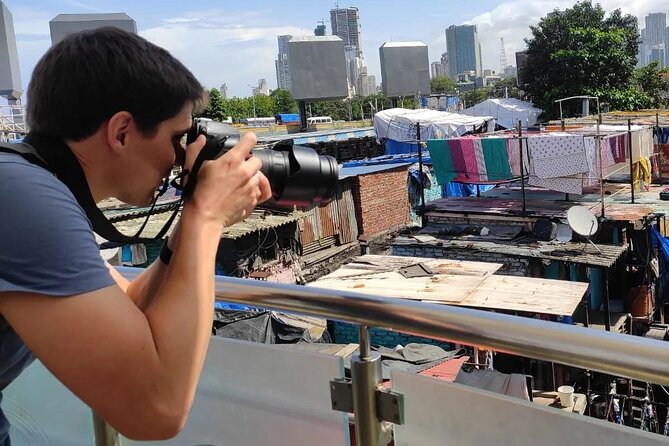
The meeting point is Mahalaxmi Station, also called Mahalaxmi Railway Station, on Keshavrao Khadye Marg in Mumbai. The tour ends back at the same meeting point, which makes the start and finish straightforward to plan around once the operator confirms the schedule.
The listing says the location is near public transportation. That is useful in a city where a clear meeting point can save time, though you should confirm the precise meet-up instructions with the provider. No separate transport tickets are listed as included for this Dhobi Ghat walk.
The tour is offered with a mobile ticket, and confirmation is provided at booking. All fees and taxes are included in the stated price. Food and drinks are not included, so plan to arrange those separately if you need them.
Is $12 Good Value?

At $12 per person, the tour is reasonably priced if you value a guide’s explanation and want a closer look at a distinctive part of Mumbai’s working life. The cost includes the guide and all fees and taxes, and a group capped at 15 can give you room to ask questions without the feel of a large coach outing.
The price is less compelling if you expect a long tour, a formal demonstration, or a fully manual laundry process. Those details are not guaranteed, and the conflicting duration information makes it especially important to confirm what the fee buys before you book.
I would judge the value by the guide and the context, rather than by the number of things you can tick off. A good guide can help you notice the division of labor, the mix of machines and hand work, and the role of the laundry in Mumbai. If the visit is very short or the work is quiet, that explanation becomes even more important.
Who Should Book This Walk?
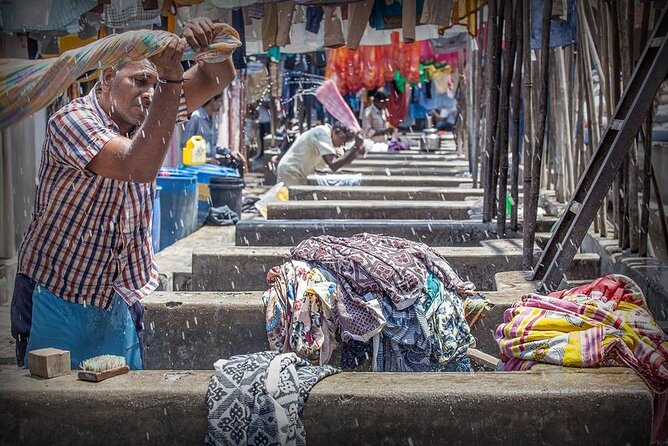
This tour suits you if you are curious about Mumbai beyond its headline sights and want to see a long-running local trade at work. It is a practical choice for anyone interested in daily life, family labor, or how a city handles a basic need on a vast scale.
It may also suit you if you prefer a guide who can answer questions rather than simply looking around on your own. The group limit of 15 is modest, and the experience is described as suitable for most people. No special physical requirements are provided, so ask the operator if you have a specific concern.
I would hesitate if your schedule is tight and you need a precise duration, or if you are booking because you expect to see rows of workers doing every task by hand. Confirm the current conditions and timing first. Also make sure the booking is for Dhobi Ghat: the Elephanta Caves material in the supplied description does not match this tour.
A Practical Booking Check Before You Go

The most useful step is to contact Mumbai Dream Tours before booking and confirm four points: that the activity is the Dhobi Ghat walk, how long it actually lasts, what time it starts, and where the guide will meet you at Mahalaxmi Station. This is not needless fuss. The description mixes information about two different Mumbai attractions, and the stated duration is unusually long for the activity described.
The tour allows free cancellation up to 24 hours before the start time. Cancellations made less than 24 hours ahead are not refundable, and changes inside that window are not accepted. The cut-off follows local time, so keep Mumbai time in mind if you are arranging plans from abroad.
Should You Book the Dhobi Ghat Guided Tour?
Book it if you want a low-cost, guided look at a working part of Mumbai and are happy to let the guide’s explanations provide much of the experience. The family roles, charcoal irons, and blend of hand work with machines give the visit substance beyond a quick photo stop.
Wait until you have clarified the duration and the Elephanta mix-up. If you want a long, predictable tour with a guaranteed display of manual work, this may not be the safest choice. If you are flexible, curious, and interested in the people and process behind Mumbai’s laundry, the walk can offer a useful window into everyday city life.
FAQ
Where does the tour start?
It starts at Mahalaxmi Station, also called Mahalaxmi Railway Station, on Keshavrao Khadye Marg in Mumbai.
Where does the tour end?
The activity ends back at the meeting point at Mahalaxmi Station.
What is included in the price?
All fees and taxes and an English-speaking guide are included.
Are food and drinks included?
No. Food and drinks are not included.
What language does the guide speak?
The tour includes an English-speaking guide.
How large is the group?
The maximum group size is 15.
How long does the tour last?
The stated duration is approximately 1 day and 6 hours, but that does not clearly match the Dhobi Ghat walk described. Confirm the actual duration with the operator before booking.
Can I cancel for a refund?
You can cancel at least 24 hours before the experience starts for a full refund. Cancellations made less than 24 hours before the start time are not refundable.
Just added around Mumbai
- Victorian Gothic Heritage Quarter and Art Deco Walking Tour★ 4.9 · 14 reviews
- Mumbai Airport to Mumbai Hotels : Private Transfers★ 5.0 · 13 reviews
- Private Walking Tour in Dharavi Slums★ 5.0 · 7 reviews
- Mumbai Sightseeing Tour★ 5.0 · 11 reviews
- Vegetarian Indian Cuisine Virtual Cooking Class Experience from Mumbai★ 5.0 · 4 reviews
- Private Mumbai 2-Day Tour Package:City + Slum & Elephanta Island.★ 5.0 · 3 reviews
- Mumbai by Night Guided Tour★ 5.0 · 6 reviews
- Taj Mahal Day Trip Including Same Day Flights from Mumbai★ 5.0 · 3 reviews
Dhobi Ghat Tours, compared.

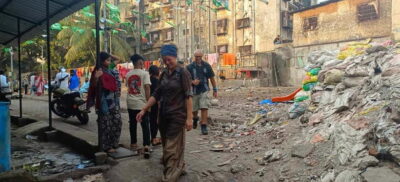
Dhobi Ghat Laundry and Dharavi Slum Tour with Local
Read our review →
Private Combo Tours Sightseeing + Dharavi Slum + Dhobi Ghat & Dabbawalas
Read our review →
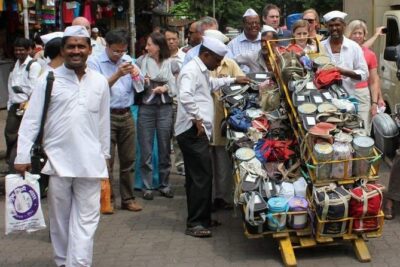
Dabbawala, Dhobi Ghat & Dharavi slum Tour with Local Train Ride
Read our review →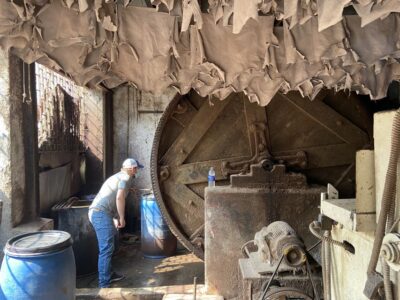
Dharavi Slum Tour with Dhobi Ghat (Open-Air Laundry)
Read our review →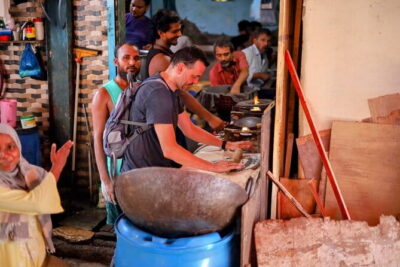
Mumbai Dharavi Slum, Dhobi Ghat & Dabbawala Lunchbox Tour
Read our review →
Mumbai City Tour With Laundry And Hotel Transfers (South Mumbai)
Read our review →Browse the lists this tour appears in