
Reviewed · DHARAVI SLUM TOURS
Dharavi Slum & Dhobi Ghat Mumbai: Private Guided Tour
Dharavi is not simply a place to look at from a distance. On this private tour, you walk its narrow lanes with a local guide and see working pottery, leather, textile, and recycling businesses, then get a viewing-point look at the enormous Dhobi Ghat laundry.
I like two things in particular: the focus on Dharavi’s working economy, not just its housing, and the chance to ask a guide questions as you go. Guides Priti, Shruti, Max, and Ruba have led the tour, with praise for their clear explanations and attention to questions.
One consideration: this is a walking visit through a densely built neighborhood, and the schedule information gives Dhobi Ghat as both an early stop and the tour’s ending point. Confirm the route and transport details before you set out.
Key points to know before you go
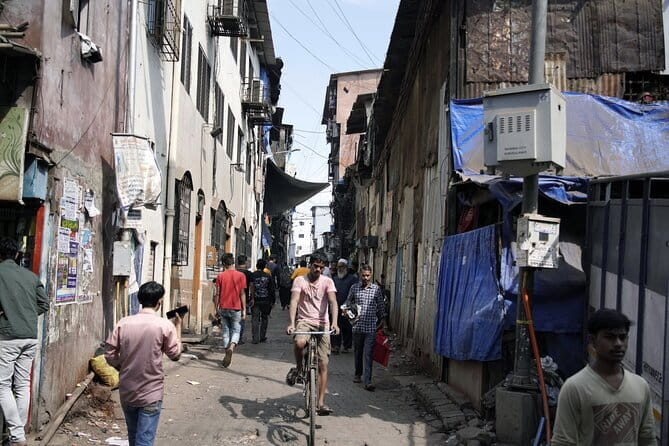
- Dharavi is the main event: Allow about two hours to walk its lanes and see small-scale pottery, leather, textile, and recycling work.
- Dhobi Ghat is viewed from outside: You get a designated vantage point and an explanation of the laundry’s operations, not entry into the work area.
- The tour is private: Only your group takes part, so you can ask questions and set the pace more easily than on a large group outing.
- Your guide shapes the experience: Priti, Shruti, Max, and Ruba are among the guides associated with the tour. Availability of a specific guide is not guaranteed.
- The price is $17.57 per person: Bottled water, train tickets, and an English-speaking guide are included.
- Check the route before booking: The stated meeting point is in Mahim, while the stated end point is Dhobi Ghat in Lower Parel. The supplied stop order and end point do not fully match.
Dharavi, seen through its workshops
The most useful idea to carry into Dharavi is that this is not only a residential neighborhood. It is also a busy center of small businesses whose work is part of Mumbai’s wider economy. The tour puts that enterprise at the center, which gives you a more grounded visit than a walk that treats the area as scenery.
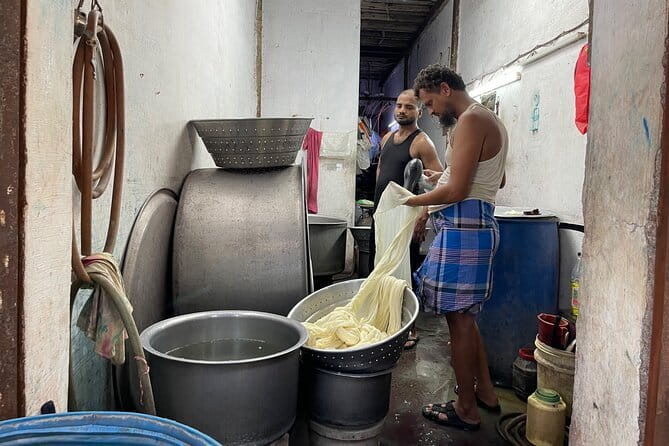
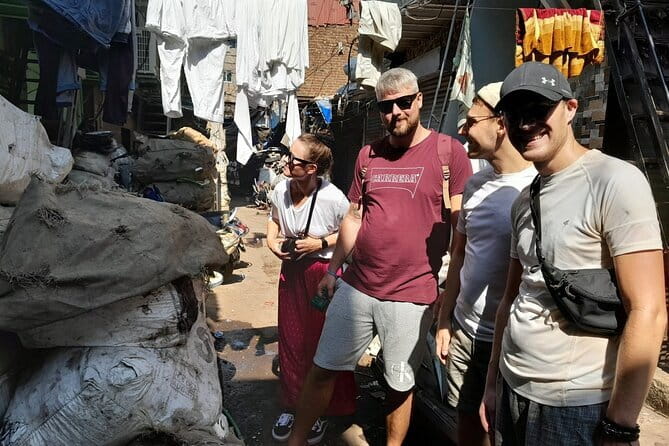
You will follow a local guide through narrow lanes, with stops and explanations focused on the work happening around you. The industries named for the route include leatherwork, pottery, textile production, and plastic recycling. In Kumbharwada, the pottery area, you can see how one kind of craft fits into the neighborhood’s broader network of work.
The recycling units are another notable part of the tour. The description points to sophisticated plastic recycling, a subject that can help explain how local businesses make use of materials that might otherwise be discarded. Expect to see working enterprises, not a staged display designed for visitors.
That distinction matters. You are entering a lived-in place where residents are working and going about their day. A local guide can explain the context and help you understand what you are seeing, but the visit is still a walk through people’s neighborhood. Ask before taking photographs, follow your guide’s directions, and treat workers and residents as people, not as part of an exhibit.
The tour’s description says you may interact with locals, but it does not promise a set meeting or workshop demonstration. Keep your expectations flexible. What you see may depend on the day’s activity, the route, and what is open or working at that moment.
More Dharavi tours around Mumbai:
- Dharavi slum tour in Mumbai by Female tour guides of the slum
★ 5.0 · 1,976 reviews - Mumbai: Dharavi Slum, DhobiGhat, and Dabbawallas Tour
★ 4.9 · 689 reviews - Dharavi Slum Tour
★ 5.0 · 625 reviews
Why a local guide makes a difference
A guide is central to this visit. Dharavi’s lanes and industries can be hard to interpret on your own, and an English-speaking guide can explain the area’s history, economy, and community life as you walk. The private format also makes it easier to pause for questions rather than keep pace with a large group.
The guides named in accounts of the experience include Priti, Shruti, Max, and Ruba. Their strengths, as reflected in the feedback, include being friendly and prompt, explaining daily life clearly, sharing substantial information, and responding to questions or requests. If you have a preference, ask whether that guide is available when you book. The tour does not guarantee a particular guide.
I would arrive with questions that help you understand the work rather than questions that turn residents into a spectacle. You could ask how the pottery, leather, textile, and recycling businesses operate, or how the neighborhood’s industries connect to Mumbai. The guide’s answers can make a short walk more meaningful than simply passing through.
This is a private activity for your group alone. That does not mean the guide can promise access to every workshop or arrange a conversation with every worker. It does mean the experience is not shared with a larger tour party, which can make discussion and pacing more personal.
Dhobi Ghat’s organized washday
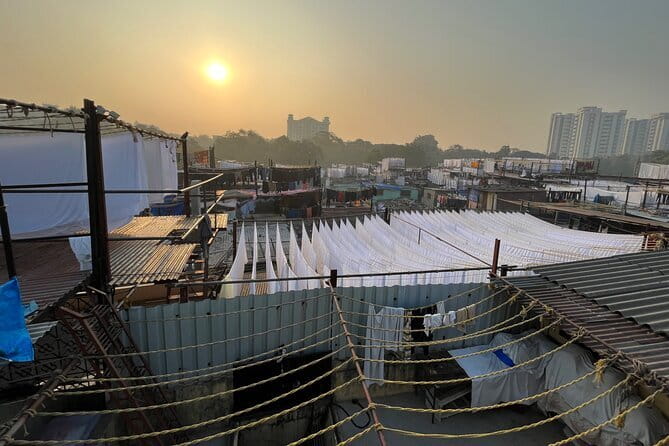
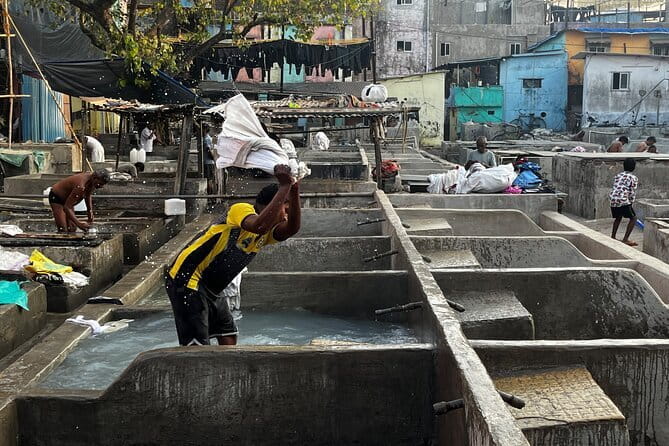
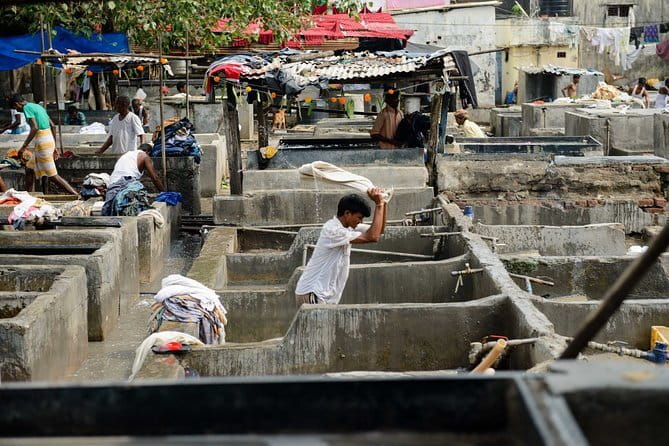
Dhobi Ghat offers a very different view of Mumbai’s work. From a designated vantage point, you look across the world-famous open-air laundry and watch the movement of clothes through washing, drying, and pressing. You will not enter the laundry itself, but the viewing point is intended to give you a clear look at its scale.
Your guide explains how the traditional washermen, known as dhobis, have carried out this work for more than a century. The laundry serves hotels, hospitals, and households across the city, so the view is more than an unusual photo opportunity. It shows an essential service operating on a scale that is difficult to picture from a street-level view alone.
The stop is listed as about 15 minutes. That is enough for an introduction and a look from the vantage point, but it is a brief visit rather than an extended exploration. If photography matters to you, the tour promises a useful viewing spot, though it cannot guarantee particular light, activity, or a specific photograph.
There is a practical wrinkle in the route details. Dhobi Ghat is listed as the first stop, Dharavi as the second, yet the tour is also said to conclude at Dhobi Ghat. Since the meeting point is in Mahim and the stated end point is in Lower Parel, check the actual sequence and transfer plan with the operator before booking. This matters if you are arranging onward travel or have a tight schedule.
Three hours, with walking at its center
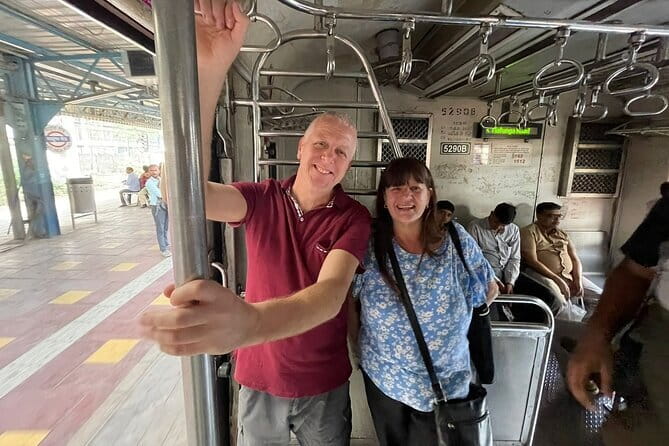
The experience lasts about three hours. The listed timing assigns roughly two hours to Dharavi and 15 minutes to Dhobi Ghat, leaving some time for travel between the meeting point and stops. The Dharavi section is explicitly a walking tour, so choose comfortable footwear and be ready for narrow lanes.
The meeting point is Third Wave CoffeeTip Road, Unit no. 58, Ground, Ram Mahal, Senapati Bapat Marg, Marinagar Colony, Station, Mahim. The tour ends at Dhobi Ghat, where you can catch an Uber or take a train back to your hotel. Train tickets are included, but the information does not specify exactly which train journey is covered.
The overview refers to private air-conditioned transfers, while the included items specifically name train tickets, bottled water, and a professional English-speaking guide. Because those transport details are not spelled out consistently, ask the operator what the air-conditioned transfer covers and whether it applies to your particular departure. Do not assume every leg is by car.
Bottled water is a welcome practical inclusion on a walk. The tour is listed as suitable for most participants and is near public transportation, but the narrow-lane walking is still worth considering if you have mobility concerns or prefer not to walk for an extended period.
More Dhobi Ghat visits around Mumbai:
- Mumbai: Dhobi Ghat Laundry and Dharavi Slum Tour with Local
★ 5.0 · 469 reviews - Mumbai: Dharavi Slum and Dhobi Ghat Laundry Tour
★ 5.0 · 317 reviews - Private Combo Tours Sightseeing + Dharavi Slum + Dhobi Ghat & Dabbawalas
★ 5.0 · 245 reviews - Dharavi, Dhobighat, and Mumbai Dabbawallas
★ 5.0 · 168 reviews
Is $17.57 good value?
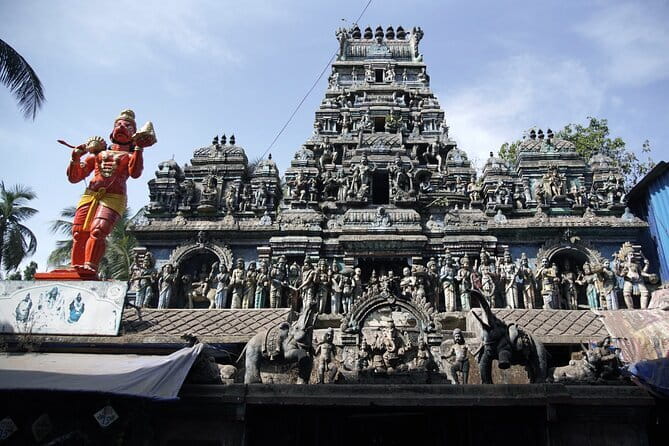
At $17.57 per person, the price is appealing for a private, roughly three-hour experience with a local English-speaking guide, bottled water, and train tickets. The biggest value is not the number of stops. It is having someone explain the livelihoods and daily routines behind places that could otherwise be reduced to a quick look and a photograph.
The private format is especially useful if you want to ask questions, need explanations at your own pace, or prefer not to join a large group. Group discounts are available, though the exact discount is not specified. Since the listed price is per person, check the final cost for your group before confirming.
Keep the scope in mind. Dhobi Ghat is a short viewing stop, not an interior visit, and Dharavi takes most of the walking time. If you want a broad tour of Mumbai’s major landmarks, this is not that kind of outing. It is a focused cultural visit built around two places of work.
The tour has a 5.0 rating based on four reviews, a small sample. The comments particularly value guides who answer questions, explain daily life, and respond to the group’s interests. That is encouraging, but the limited number of ratings means it is sensible to judge the tour by its itinerary and format as well as its score.
Who will get the most from this walk?
This tour suits you if you want to understand Mumbai through the work people do, and if you are willing to approach a residential neighborhood with care. It is a good fit for curious visitors who value explanation and conversation more than polished attractions or long stretches of sightseeing from a vehicle.
It may be less suitable if you want a fully structured workshop visit, guaranteed interaction with artisans, or extended time inside Dhobi Ghat. Those details are not promised. It is also worth choosing another outing if you are uncomfortable walking through narrow residential lanes or taking photographs only when appropriate.
The experience is private, but the setting is not made private for you. Residents continue their daily routines, businesses keep working, and the guide’s role is to help you observe respectfully. That is the right frame for a visit that aims to replace stereotypes with a clearer picture of enterprise and community.
Small practical details worth checking
Confirmation is provided at booking, and mobile tickets are accepted. The tour is close to public transportation, and most people can participate. If you need a particular guide, ask about Priti, Shruti, Max, or Ruba, but treat that as a request rather than a guarantee.
The cancellation terms are straightforward: cancel at least 24 hours before the start time for a full refund. Cancellations or changes made less than 24 hours before the start are not accepted for a refund or change.
Before the day, confirm the order of the two stops, the transfer arrangements, and which train tickets are included. Those questions address the main points that are not fully clear in the route details.
Should you book it?

Book this tour if you want a respectful, guide-led look at Dharavi’s businesses and a brief, informative view of Dhobi Ghat. The private format, focus on local work, and strong comments about guides such as Priti, Shruti, Max, and Ruba make it a worthwhile choice for a curious visitor.
Skip it if you expect access inside the laundry, a guaranteed artisan demonstration, or a full Mumbai city tour. Before paying, ask the operator to confirm the route order and transport plan. If those details suit your day, this is a modestly priced way to see two working parts of Mumbai with useful context.
FAQ
How long is the tour?
It lasts about three hours. The Dharavi walk is listed at about two hours, while the Dhobi Ghat stop is about 15 minutes.
Is this a private tour?
Yes. Only your group participates.
What is included in the price?
The listed inclusions are bottled water, train tickets, and a professional English-speaking guide.
Do you go inside Dhobi Ghat?
No. You view the open-air laundry from a designated vantage point and hear about its work and history.
Where does the tour start and end?
It starts at Third Wave CoffeeTip Road in Mahim and is stated to end at Dhobi Ghat in Lower Parel. The route details also list Dhobi Ghat as the first stop, so confirm the actual order with the operator.
Which guides lead the tour?
Guides associated with the experience include Priti, Shruti, Max, and Ruba. You can ask whether a particular guide is available, but a specific guide is not guaranteed.
Can I cancel for a refund?
Yes. You can receive a full refund by cancelling at least 24 hours before the tour’s start time. Cancellations or changes within 24 hours are not accepted.
More private tours around Mumbai
- Private Mumbai Sightseeing Tour (Traveller’s Choice Award Winner)
★ 5.0 · 1,565 reviews - Elephanta Caves & Island Guided Private Tour
★ 5.0 · 1,327 reviews - Private Guided Walking Tour in Fort & Colaba
★ 5.0 · 895 reviews - Highlights of South Mumbai Guided Private Tour in AC Vehicle
★ 5.0 · 620 reviews
Just added around Mumbai
- Victorian Gothic Heritage Quarter and Art Deco Walking Tour★ 4.9 · 14 reviews
- Mumbai Airport to Mumbai Hotels : Private Transfers★ 5.0 · 13 reviews
- Private Walking Tour in Dharavi Slums★ 5.0 · 7 reviews
- Mumbai Sightseeing Tour★ 5.0 · 11 reviews
- Mumbai by Night Guided Tour★ 5.0 · 6 reviews
- Vegetarian Indian Cuisine Virtual Cooking Class Experience from Mumbai★ 5.0 · 4 reviews
- Private Mumbai 2-Day Tour Package:City + Slum & Elephanta Island.★ 5.0 · 3 reviews
- Transfer from Mumbai Airport to Hotel★ 4.0 · 7 reviews
Dharavi Slum Tours, compared.
Dharavi slum tour in Mumbai by Female tour guides of the slum
Read our review →

Dharavi Slum Slumdog Millionaire Tour with a Local
Read our review →
Mumbai Slum Tour – Visit Dharavi Slum with Local Guide
Read our review →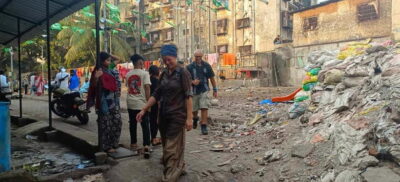
Dhobi Ghat Laundry and Dharavi Slum Tour with Local
Read our review →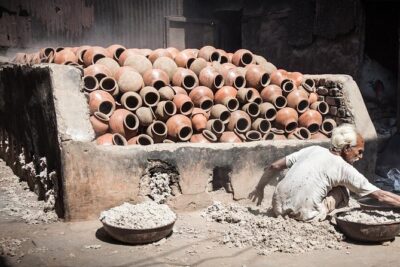
Browse the lists this tour appears in